Figure 1. Kill Bill Poster Art
Taratino's 2003 epic about fallen assassin "Black Mamba" is jam packed with references to film culture. Audiences are sent on a whirlwind through time as they re-experience a selection of their favourite moments in film. What makes this ingenious is that these slices of historic film are working as a collage to the demand of a new narrative. We are experiencing our best moments in film, in a new package but we are being told them by Tarantino from a cultural point of view.
•Directed by: Quentin Tarantino
•Written by: Quentin Tarantino
•Cast: Uma Thurman as The Bride, Lucy Lui as O-Ren Ishii, Vivica A. Fox as Vernita Green, Daryl Hannah as Elle Driver, Julie Dreyfus as Sophie Fatale and David Carradine as Bill.
•Genre: Mystery, Suspense, Action & Adventure
•Duration: 111 Minutes (aprox)

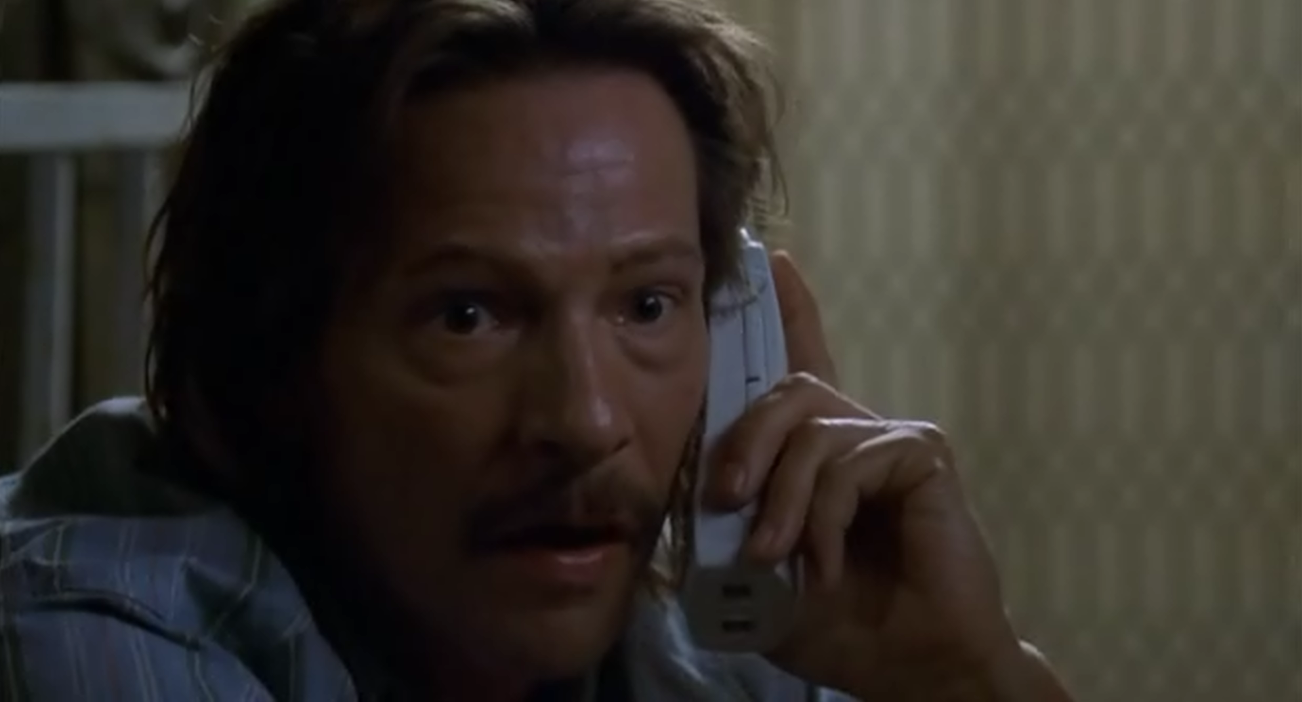
Figure 2. "I'm the man” - (Bill, Kill Bill)
The film opens on the set of a wedding massacre exposed in black and white immediately telling its audience that the plot is shallow when the bride is executed by an unknown party whose baby she is carrying. The second we see the Bride emerge from her coma we know that she is not going to simply lay down and die without a doubt this movie is about revenge. At its surface the plot is as deep as a puddle the real treat lies in its details as classic moments transport its viewers into nostalgia, causing themselves to question if they have seen the film before... Mark Conard of Metaphilm observes:
“In Kill Bill: Volume 1, more than in any of his other films, Tarantino revisits those movies and movie genres that he so loved as a kid, particularly the martial arts films and the spaghetti westerns (with cartoons and “blaxploitation” films thrown in for good measure). He even includes the grainy “Our Feature Presentation” graphic from those good old days at the beginning of the movie, and thus we in the audience are instantly transported, with a wave of nostalgia, backwards through adolescence to childhood itself.” (Conard: 2003)The trick is they haven't... this is Tarantino's madness, a collage of his favourite moments working together to bring across an entirely new narrative to the viewer. The only difference is this narrative is not new, it is a cliché of the basic revenge plot if it wasn't for the collage of scenes or Tarantino's VHS film style outlook we would be looking at a rather simplistic tale. One could say that this is what Tarantino wanted to say about his gallery of greats, from a narrative standpoint they were basic but they worked and now he has shown us that they can still work.

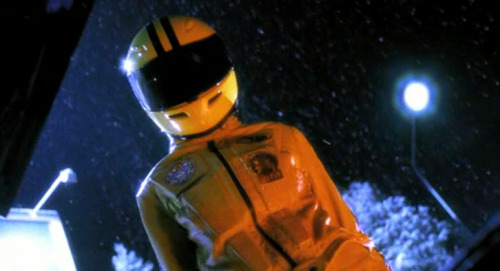
Figure 3. "Revenge is a dish best served cold” - (1st Title Card, Kill Bill)
It is very hard to pin-point all of Tarantino's references for Kill Bill but for the most part we can see the Bibliography body appears to borrow from Classic Martial Arts movies such as the television show "Kung Fu" - to which David Carradine (who stars as Bill) was a regular cast member. The television show "Shadow Warriors" to which Sonny Chiba played the character "Hatori Hanzo" who reprises his role in Kill Bill as the 16th century Samurai warrior. Subtle references can be traced back to westerns films such as "The Searchers" and "The Good, the Bad and the Ugly", but there are others... As Sandra Oddy from slideshare.net observes:
“Shooting through the cereal is a reference to the episode of the Simpsons called "Simpsoncalifragilisticexpial a-Doh-cious," which features an episode of Itchy and Scratchy called Resevoir Cats (a parody of Resevoir Dogs), guest directed by Quentin Tarantino. In the cartoon, Tarantino turns up and says : "What I'm trying to say with this cartoon is that violence is everywhere. It's, like, even in our breakfast cereal, man.” (Oddy: 2012)Truer words have never been spoken about our culture we love to see a hero fall and the more violent that fall is the better. The breakfast scene alone (in which we see two women brutally fight in a seemingly ordinary suburban town) is Tarantino's way of telling us how unordinary ordinary is. That if something so ordinary is going on then deep down somewhere there has to be some show of violence which is causing us to act orderly. Tarantino's work is also in the construction of the weaponry with women relentlessly fighting with Kitchen utensils and fire stokes... the breakfast scene in itself highlights the juxtaposition between the "epic" and the "mundane".

Figure 4. "That woman deserves her revenge and we deserve to die” - (Budd, Kill Bill)
The real challenge on Tarantino's part was intriguing an audience long enough to get them to watch a sequel. What is difficult in this particular case is the film is about a woman seeking revenge on a man known as Bill when the ending lies on a part that is not going to be released yet (Kill Bill Volume 2 - aka the eventual death of Bill). For this an execution of skill was required to give viewers their fill of blood and violence before the credits roll while staying true to the narrative and so was the story of Oren Ishii. Variety film reviews Todd McCarthy observes:
Oddly, it's an anime sequence that puts things right. The Bride's second target is O-Ren Ishii (Lucy Liu), the queen of the Tokyo underworld, whose backstory of having witnessed, as a child, the brutal killing of her gangster father by yakuza thugs and of eventually extracting her own revenge, is told entirely in a 7-minute anime specially created under Tarantino's direction by the Japanese studio, Production I.G. Inspired device is strongly effective and serves as a wonderful bridge for the action from the U.S. to Asia." (McCarthy: 2003)While it is true the story does connect the dots providing much needed justification between regions, one is still impressed by this brief depth added to this volumes particular threat. Oren suddenly has identity, in addition this allows our culture vulture Tarantino to dig into his bag of references and explore the classic Japanese anime culture hype realised and blood thirsty. In addition, we are no longer experiencing the Brides story we are experiencing Oren's story told by the Bride (a story within a story) which is also classically centred on the cliché of vendetta.

"She said that I could keep my wicked life for two reasons.” - (Fatale, Kill Bill)
As the credits roll the viewer can take one of two things away from Kill Bill it was either a display of violence shown in Tarantino's classic non linear narrative style or it was a trip down memory lane told in the terms of our culture from past cultures or at least Tarantino's perspective from past cultures. The film is completely eccentric and brings everything to extremes including the colour palette, it is hyper-real... Chris Hyde of Box Office Prophets observes:
“By taking the varied influences from his past and weaving them together into a whole new form, Tarantino has managed here to create on celluloid a work of art that exists not just as exploitation but as meta-exploitation. Kill Bill may be just an over-the-top testimonial from a devoted fan now behind the camera, or perhaps it is instead rapacious cultural piracy of the highest order.” (Hyde, 2003)Kill Bill has more to it then what first meets the eye there are numerous references, it is completely unreal and then it is not. It is a cliché but then it is so much more than that. When you watch it you are not watching a single culture, you are watching a photo album come to life. An album of past memories and past cultures. Maybe it is meta-exploitation but then what else is there. Kill Bill is what it is until it isn't, it is a post-VCR film providing a collection of various works from a rich tradition of cinema.
List of Illustrations
Figure 1. Kill Bill Art. (com) [Online image]. At:
https://blogger.googleusercontent.com/img/b/R29vZ2xl/AVvXsEgGCogg6mrkya3Vm7Uolcarxc_BYiRXDnAEBKzOffkAhtgMrwjLxk3Go5ZBHJwe3r7OfcEjxGzjgDsWI2VOnhk4sBE0xkguPRcbON_1WM9pk8k1czuKDI2K2mZ3aDe8vgvlJxFjf0bre60/s1600/kill-bill-vol-1-poster-01.jpg
(Accessed on: 03/10/12)
Figure 2. I'm the man (com) [Online image]. At: http://cdn.motinetwork.net/motifake.com/image/demotivational-poster/0911/how-did-you-find-me-kill-bill-david-carradine-demotivational-poster-1257114013.jpg
(Accessed on: 03/10/12)
Figure 3. Revenge is a dish best served cold (com) [Online image]. At: http://designyoutrust.com/wp-content/uploads/2011/05/Everything-Is-A-Remix-KILL-BILL-1-600x335.png
(Accessed on: 03/10/12)
Figure 4. That woman deserves her revenge and we deserve to die (com) [Online image]. At: http://s0.wdstatic.com/images/it/ll/f/fa/Kill_Bill_032.JPG
(Accessed on: 03/10/12)
Figure 5. She said that I could keep my wicked life for two reasons (com) [Online image]. At: http://24.media.tumblr.com/tumblr_ku99xdUCTM1qa0ltoo1_500.jpg
(Accessed on: 03/10/12)
Bibliography
Conard, Mark. (2003) Kill Bill: Volume 1 - Violence as Therapy, or: How to Be a Dick At: http://metaphilm.com/philm.php?id=200_0_2_0_M
(Accessed on: 03/10/12)
Oddy, Sandra. (2012) Kill Bill Reference Slide At:
http://www.slideshare.net/sandraoddy2/kill-bill
(Accessed on: 03/10/12)
McCarthy, Todd. (2003) Kill Bill Vol. 1 Review At: http://www.variety.com/review/VE1117921975?refcatid=31
(Accessed on: 03/10/12)
Hyde, Chris. (2005) Kill Bill Volume 1 Review At: http://www.boxofficeprophets.com/hyde/killbill.asp
(Accessed on: 03/10/11)