Hello Everyone,
Just wrapping up this Unit before I get invested in the final Unit of this year (Unit 6). I'm not without doubt there seems to be a lot to be done on this brief but I'm taking comfort in knowing that we are required to do hardly any written work and no life classes meaning I have more free time. I just have to focus gotta keep looking out for that next massive chunk of rest.
This unit has been to say the least one of the most difficult and time consuming things that I have ever done. I'm tired but It has opened my eyes a little. Animation was something I wasn't even able to comprehend before and it took a lot of soul searching to actually understand it. At least now I know how to do it for any 2D games I go to make in the future (something hush hush that I will be working on over summer).
Anyway lets sign off Unit 5...
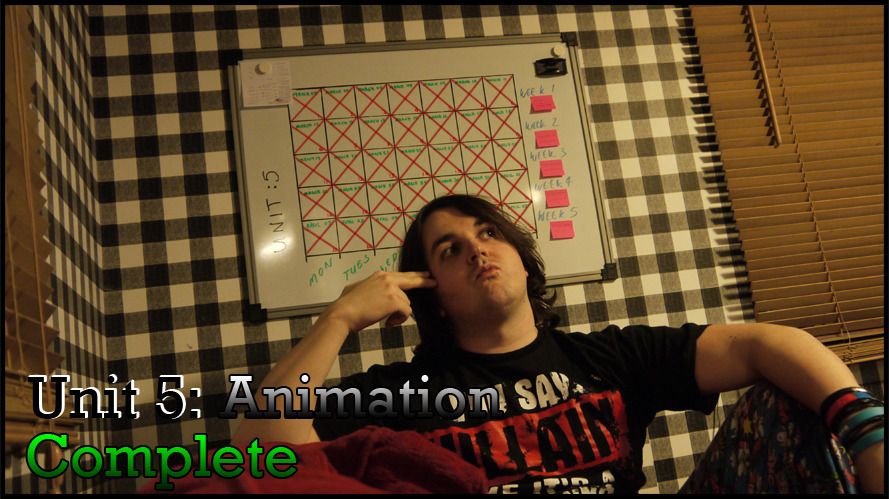
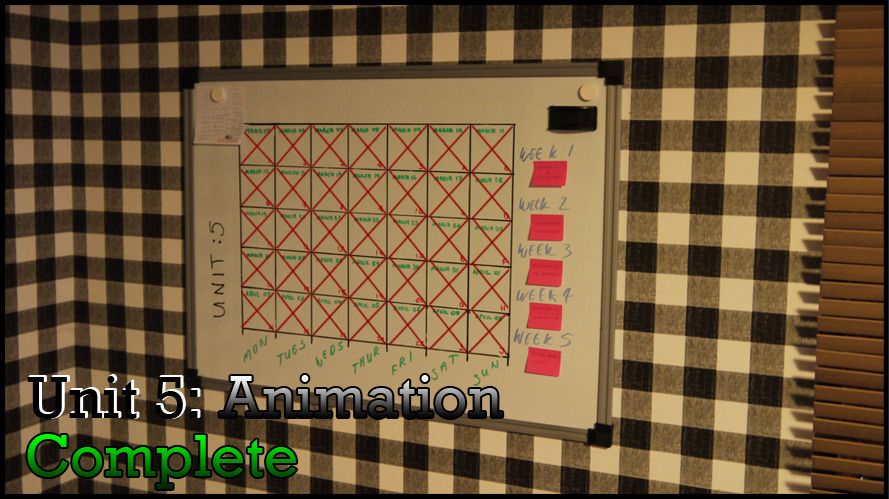
This is the task board with crosses all over, I'm pretty sure everyone has seen my process 9 or so more times by now so I'm quite sure that you are used to it. Needless to say the next Unit will probably have to be more strategic, I have a few ideas.
This is me with the board I usually do this one just to show that its all mine that's if the wallpaper didn't give it away. Tomorrow I will begin serious research into demographics etc, this is the best way to start this project so I will follow it to the letter. Tonight as always is about planning out the workload and finalising the old work load.
Its kind of weird really, a year has gone already not that it hasn't been tiring. Not sure what to expect next really, but I won't get rusty over summer If anything I have to refine I want this stuff to become second nature and if I keep going with it even if I bodge Unit 6 it won't happen again.
Well, it was an interesting experience Unit 5, part of me will miss what you have made possible in my mind. Part of me also thinks yikes how did I actually manage to do that. Hey Ho...
5 Down 1 to Go...
Over & Out,
xXStItChXx
Showing posts with label Unit 5 - Animation. Show all posts
Monday, 23 April 2012
Friday, 20 April 2012
Sunday, 15 April 2012
Unit 5: Animation - DVD Case, Display & CD Design
Hello Everyone,
Been working my butt off on animation, had no idea it would be this hectic and yet I'm only 14 seconds into it. Never the less I thought I would get the little bits out of the way quick so I can get back to it full force. I do love my branding, something which I may be porting across to my Art of Publication which I will probably get out of the way today while I'm thinking of it...
It's been a tough few weeks, I was going to get to work on some Unit 6 work this week but I had no idea how lengthily this process would be. I'm also a little worried as my paper supply is slowly becoming lower just hope I have enough if not I'm gonna have to do this additional line animation in photoshop with no paper...
Anyway lets get down to the Case Design...
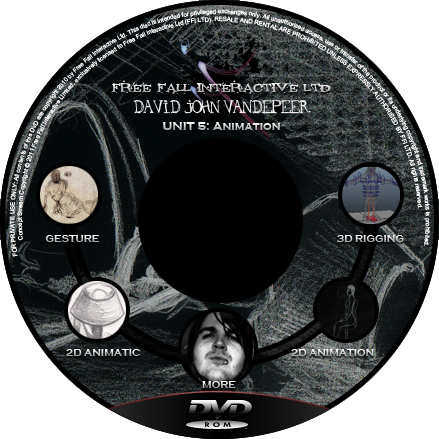
The image above is my CD design artwork, I'm gonna print all of this off now just to get it out of the way. I'm always doing this part last minute and personally I think its too big of a risk to be taking on the last few hours before a crit. Some people call me crazy for taking it to these extremes but I love my presentation...
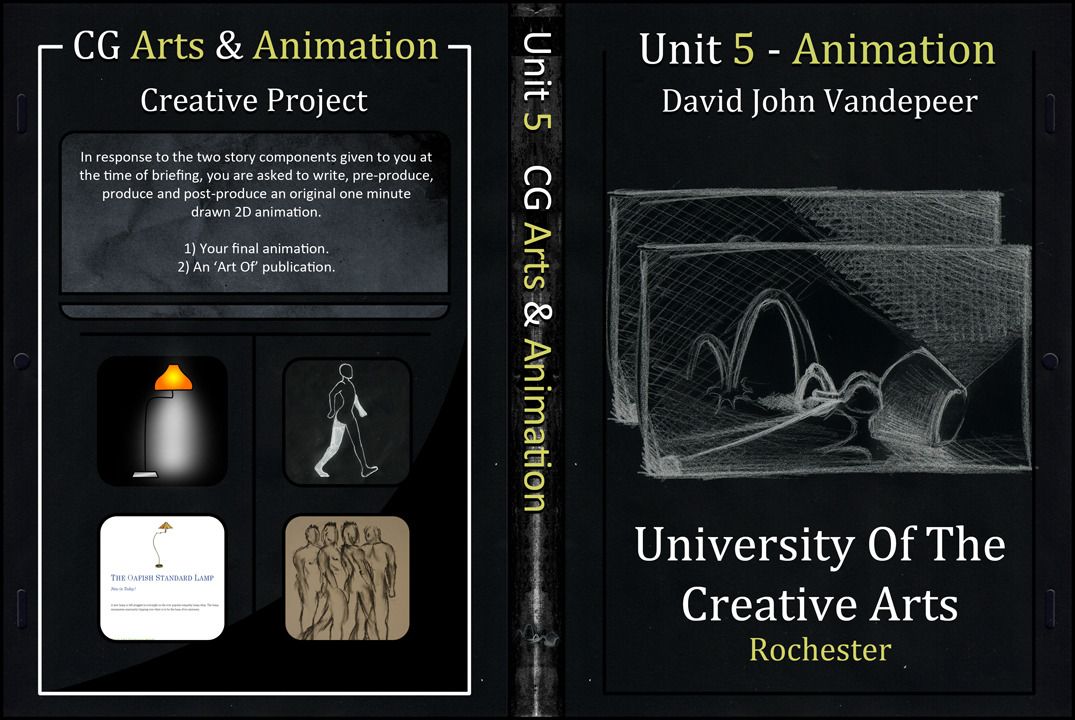
The image above shows my Case Design I'm liking the chalk feel of it mainly because I am playing with a specific style for my 2d animation. I'm not sure if anyone can notice but I used the texture of my animation paper to make the case cover, I just changed the colours somewhat - I love it.
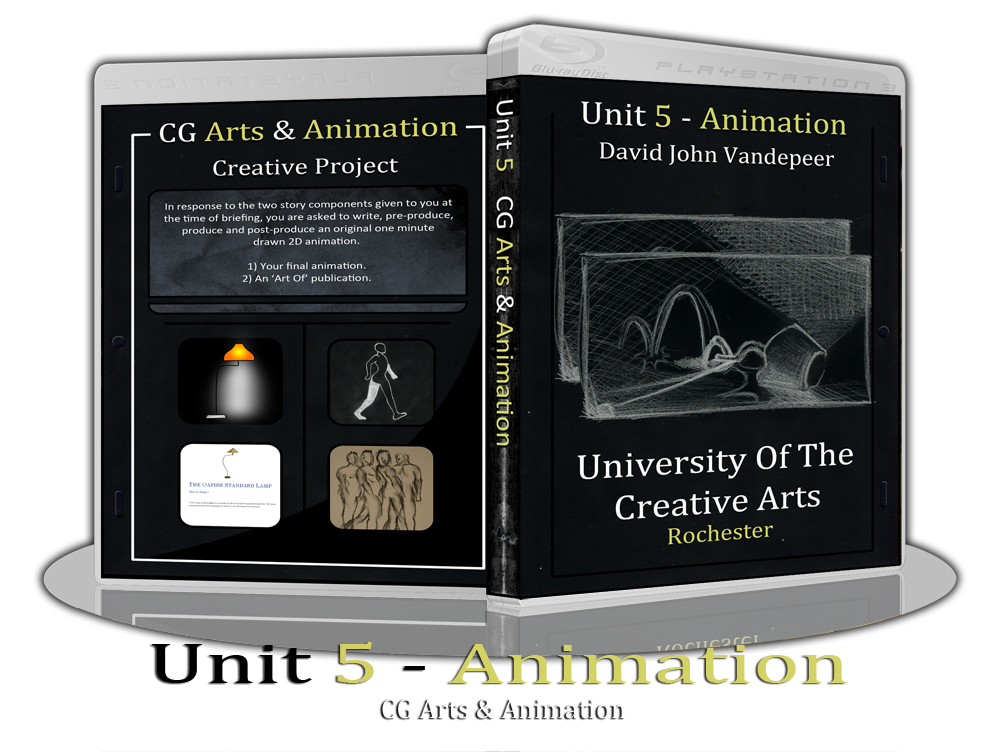
Last but not least is my case design display I do this for everything it began with my games case designs for our own personal projects. It just helps for me to see what the cover looks like in a display panel. It looks impressive, and this one is probably my most favourite to date...
Well this concludes this little update, I'm hoping I have better luck with my animating this week. I still have essays to consider but at least the time machine has been put back giving me a little more time on that. I'm just lining up my priorities here.
I hope you enjoy this post, again I can only apologise for the delay of these updates. I will not make excuses for myself only to say that I will work my butt off till I have met my goal.
Take it easy all!
Over & Out,
xXStItChXx
Sunday, 8 April 2012
Unit 5: Animation - Maya Exercises, Week 4 - Additional Rigging
Hello Everyone,
Just posting up the final Maya lesson (which I also missed - sadly). I have enjoyed these rigging exercises I must say specifically when I got to size my rig to a character mesh - It just felt great to be attributing the skeleton to my little caveman. I was a little gutted that we didn't get to skin weighting but I guess that comes soon...
The final weeks exercises consisted of additional rigs, which were basic eyes, tail & object exchange. They are all valuable things to know its just a shame we didn't get to work on that little skeleton more :P
Anyway lets get down to the videos created in Week 4:
The basic eye rig (shown above) was quite possibly the most confusing, setting up the blink motion required lots of work with attributes and connections etc. I still find this a confusing part of the process but I don't doubt that's just a trial and error experience. Eventually we will become comfortable using them, 10 rigs down the line...
The Object exchange rig (shown above) threw a few tiny problems my way particularly with the wording on the tutorial document itself. Still, once I got over the floating object situation realising it wasn't something I had done I managed to get the hang of it. I even decided to provide the returning motion just for kicks...
The Tail & Spline rig (shown above) was my favourite of this little trio. Throughout I was just constantly wondering what will this do to make it read as a tail to me. Once I began having a play with the motion after the tiresome scripting stuff it made me chuckle. I thought the whole thing was cleaver after - its awesome!
Well this concludes the final week of rigging, again I'm a little sad to see it pass but I don't doubt we will be returning here again soon. I may even look deeper into this over summer when I am juggling my company work in Unity.
I think there is only one post to go now until I finally get down to the animation project, I'm a little nervous but I guess I can only do my best here, just gotta enjoy the burn...
Take it easy all!
Over & Out,
xXStItChXx
Saturday, 7 April 2012
Unit 5: Animation - Life Class Week 15
Hello Everyone,
Last update of the day before bed, this is the stuff from our last life class session. I would just like to mention that I have not included everything drawn in the lesson as we were asked to knock up lots of smaller images which I chose to throw across in large images. Needless to say the only images that I felt were worth posting have been included in this post.
Week 15's life class was looking at moving form once again, still not my preferred method of drawing. The images were to remain loose just to somehow convey a floating gesture from image to image.
Lets get to the life class images:
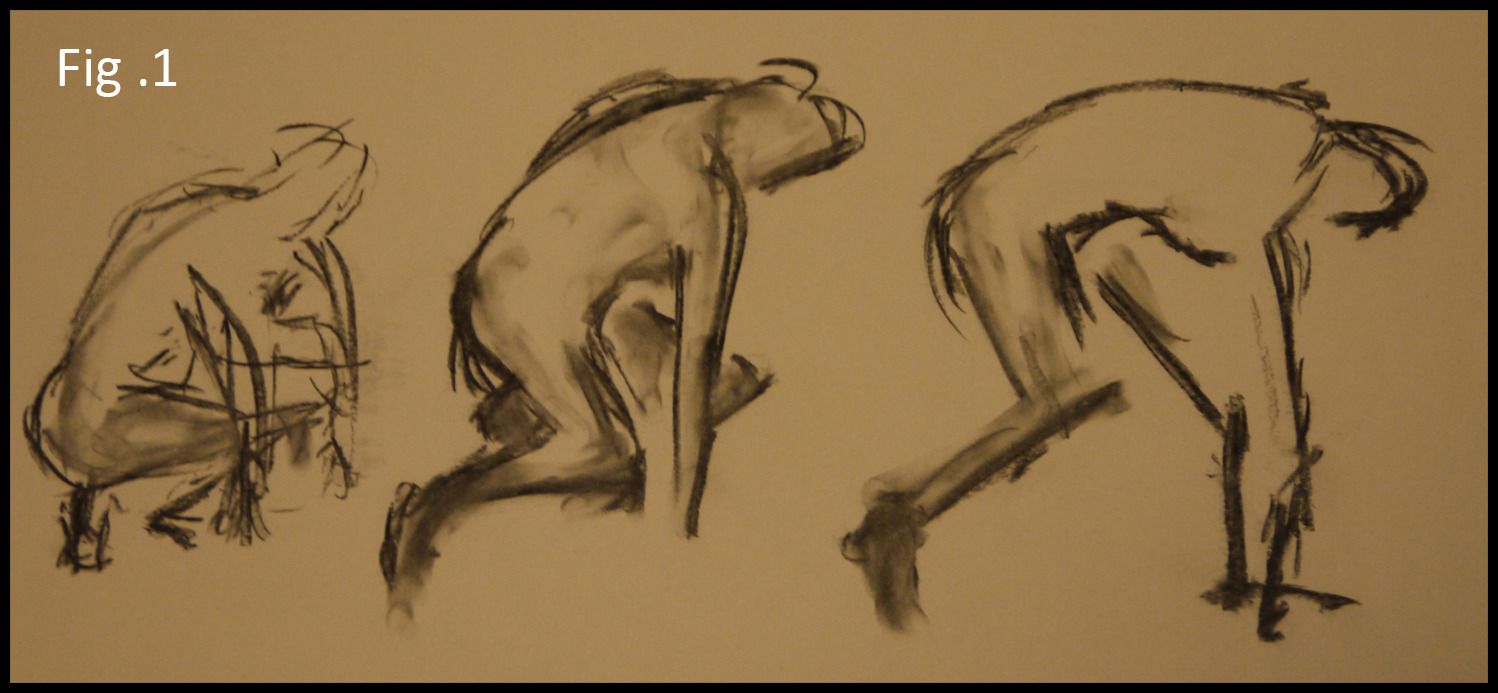
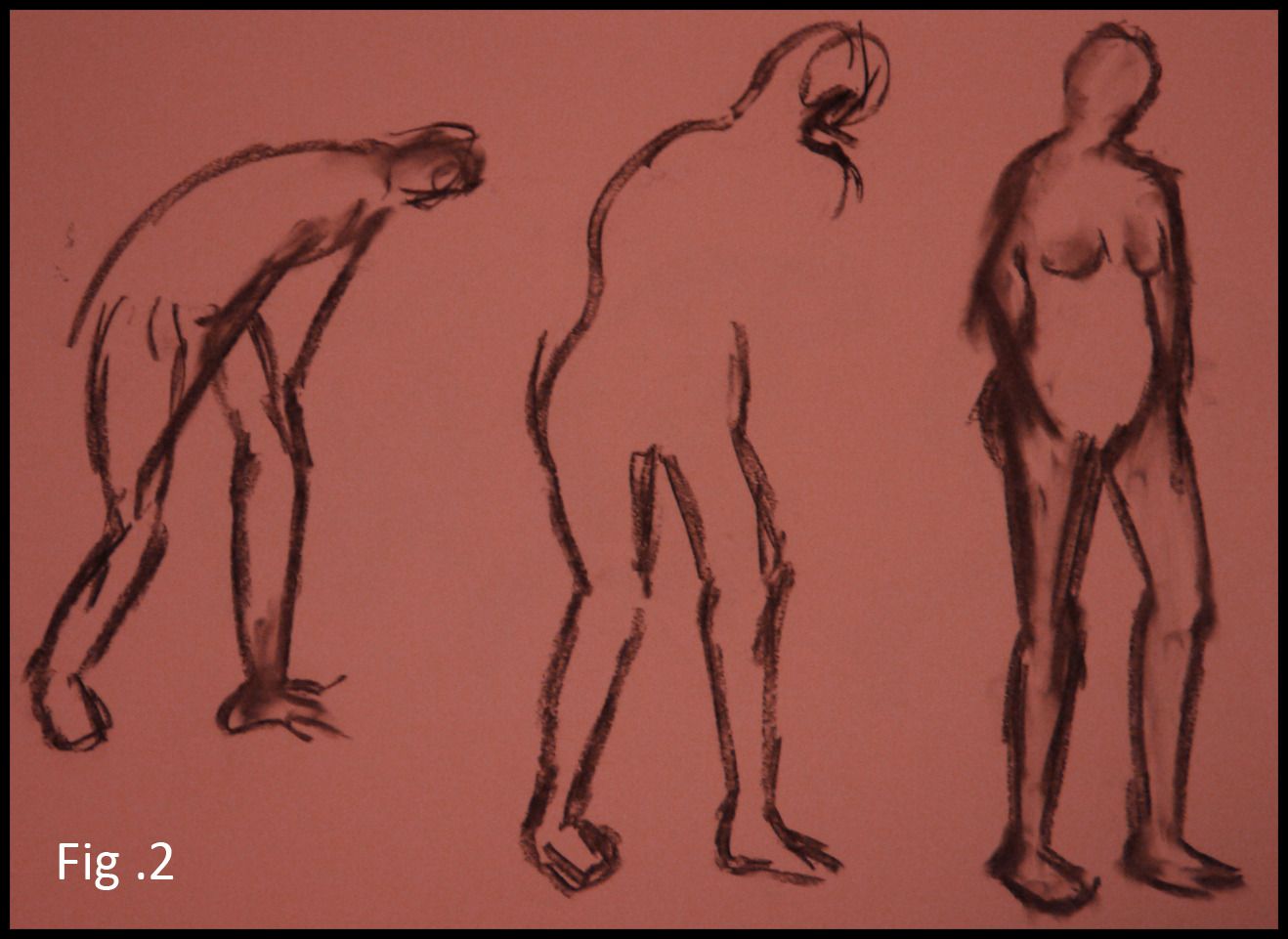
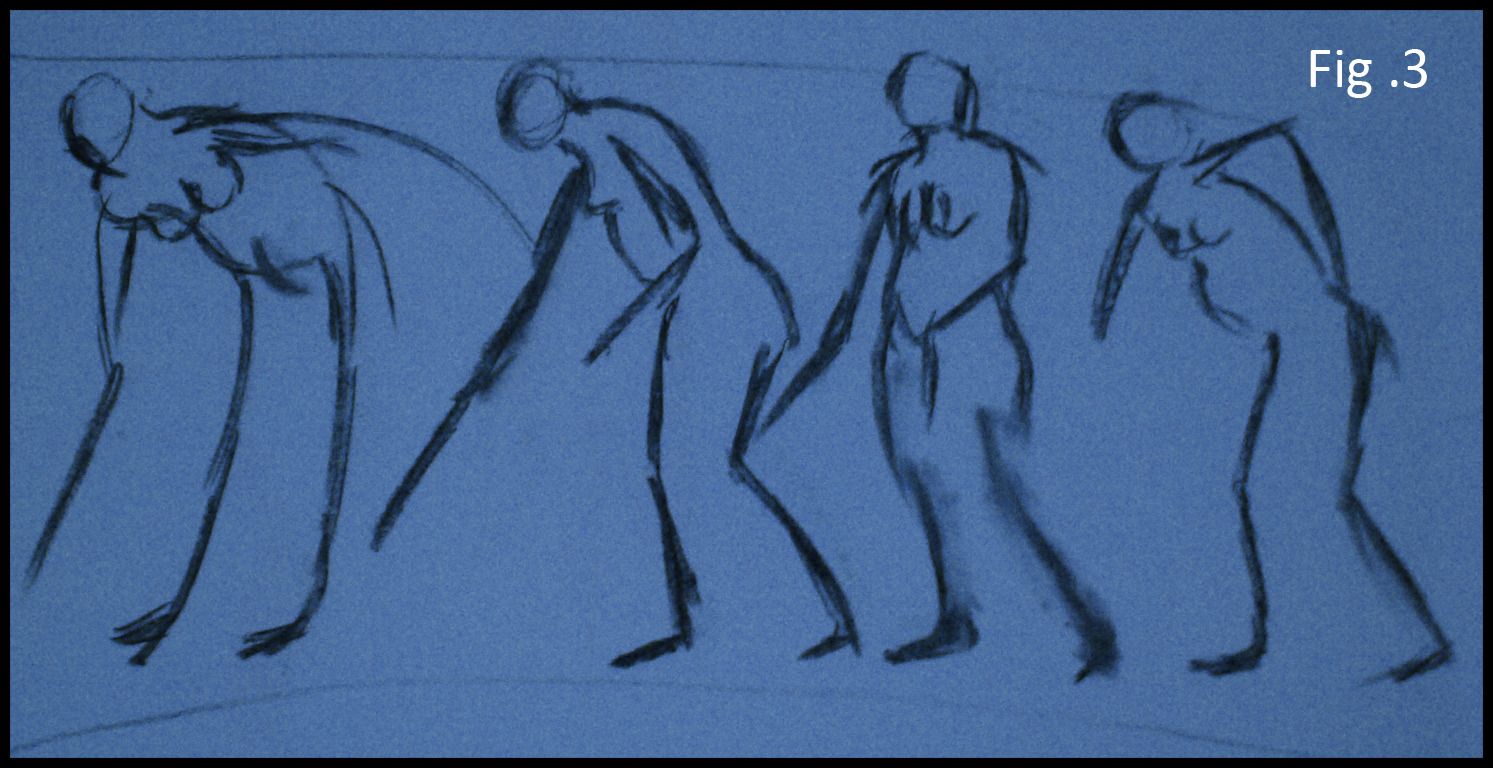
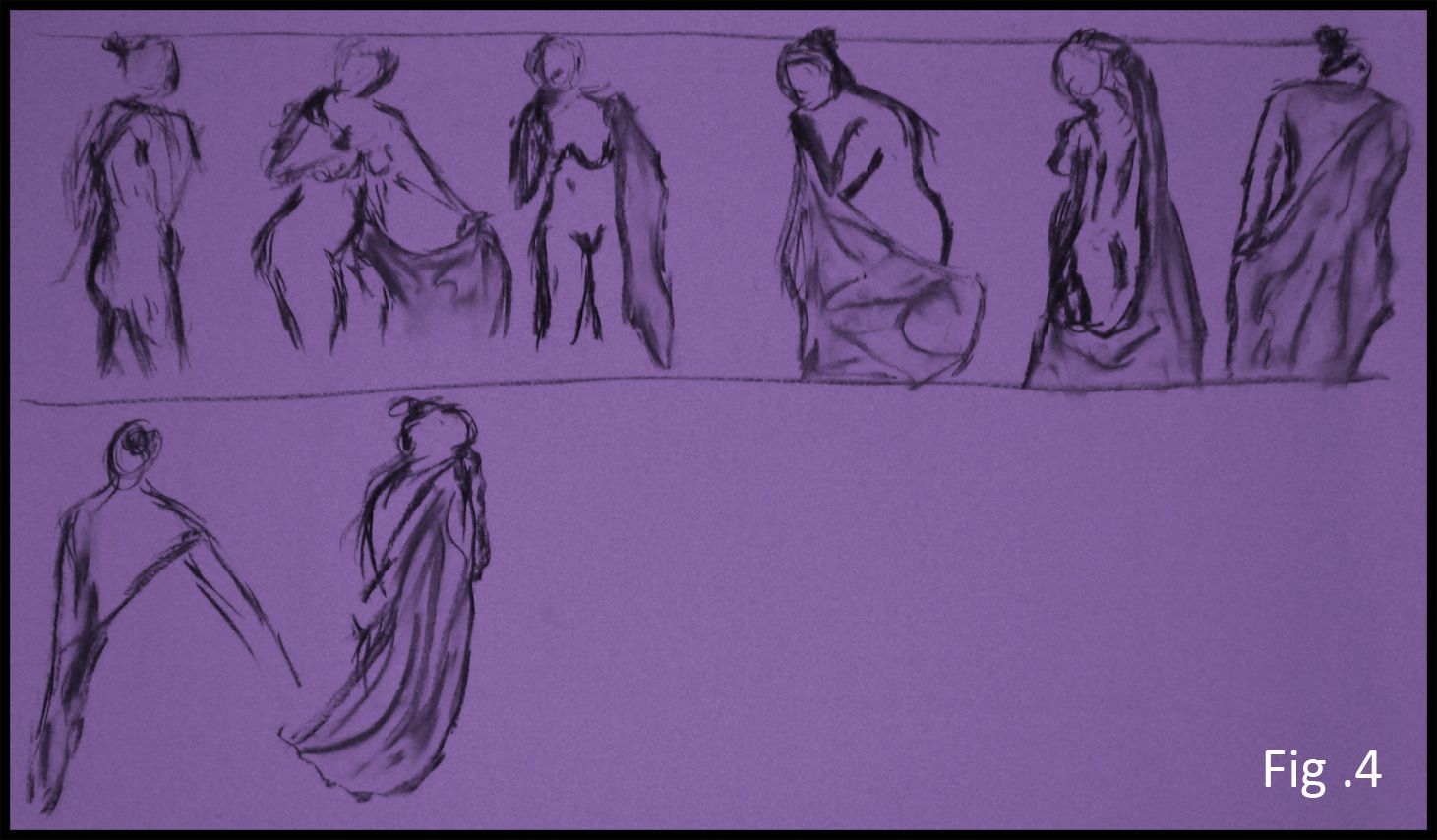
Figure 1 (shown above) is a standing pose, I preferred seeing images in this way. The problem I felt with the moving image is after a while the images begin to merge into a mess and its difficult to isolate which line is which. Before you know it you are ruining forms which made more sense earlier on.
Figure 2 (shown above) is the continuation of the standing form in figure 1. The page changing between figure 1 to 2 delayed the completion of this page, I had underestimated how used to drawing massive I had become. My perception of visual form resolution has changed so being asked to draw smaller suddenly was a little bit of a shock on my eye.
Figure 3 (shown above) consisted of the model sweeping the floor something we have seen alot of this past few weeks. These were all required to happen very fast, I found adapting to this style of drawing difficult, I like having the freedom to refine. In this case you blink and the pose the model was in is gone, you can only move on, it was challenging to say the least...
Figure 4 (shown above) utilised a fabric of sorts which made the drawing easier as it covered a third of the form half of the time. My eyes were also adapting to the idea of a smaller image. I was glad by this point because I was tired of constantly having to change massive A1 paper for 2-3 charcoal rough sketches...
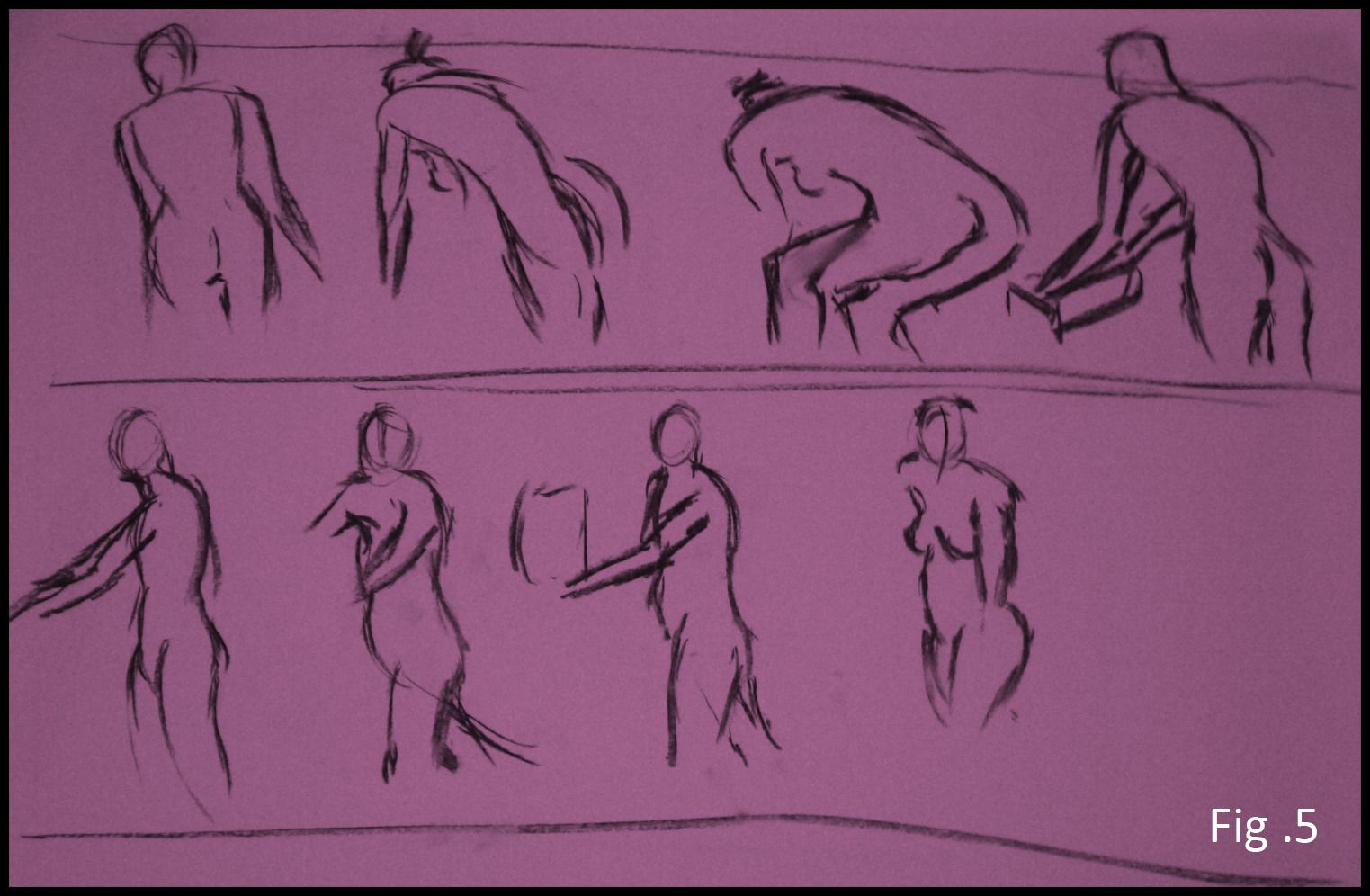
Figure 5 (shown above) consisted of our model picking up and object and then throwing something from it. This turned out better then I thought it would, again I was proud that my eyes actually adapted to the size alteration. The second drawing from the top left was quite possibly my most favourite here, the form was good for such a quick sketch...
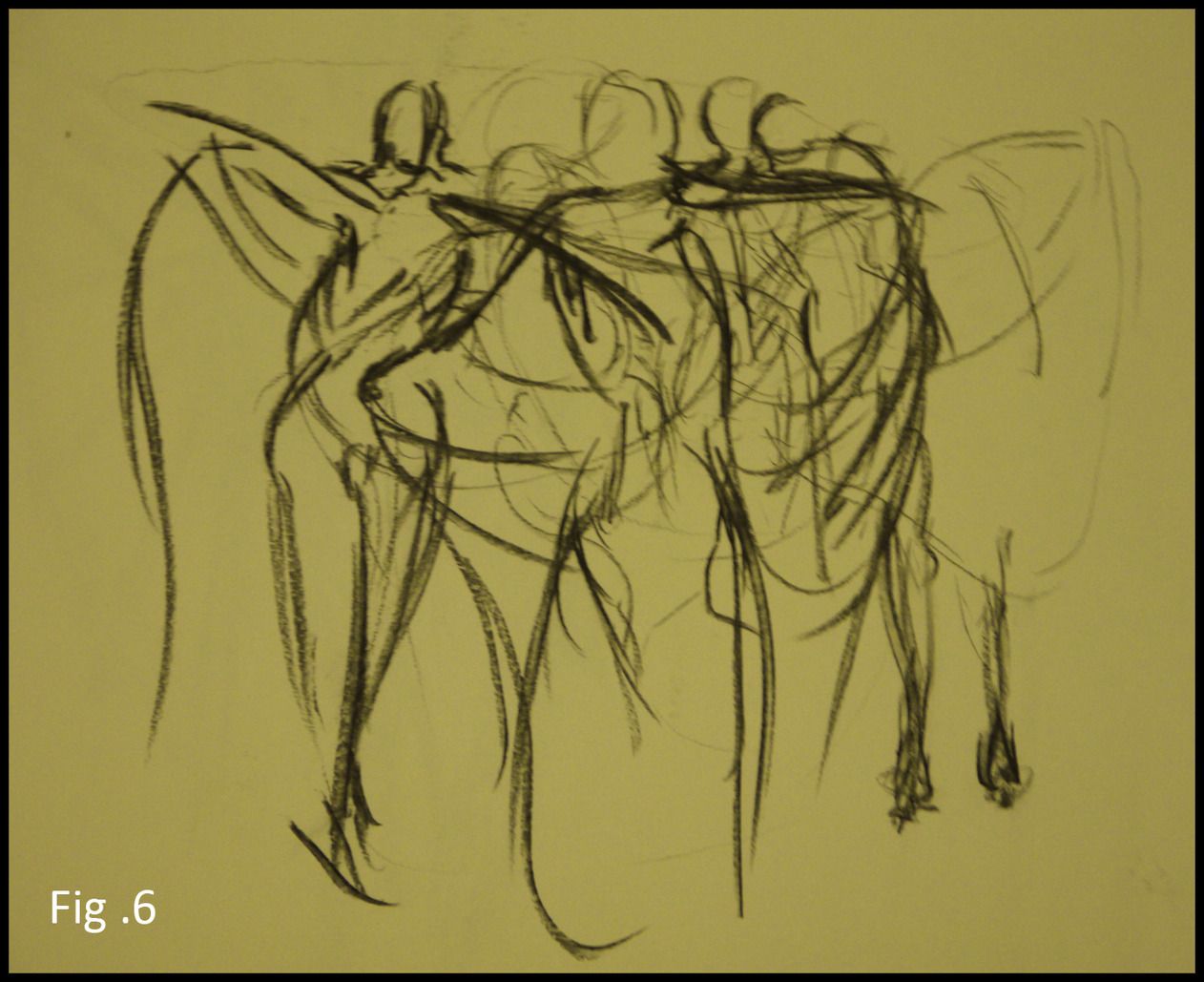
Figure 6 (shown above) was the first of many moving images we were to construct. Some people found this process easy, I didn't, I understand the importance of a flowing image but I just couldn't get comfortable for the short period of time in which we were to draw. As mentioned in other post I like being able to make refinements, form has to at least feel right to me, this process I felt didn't allow for that.
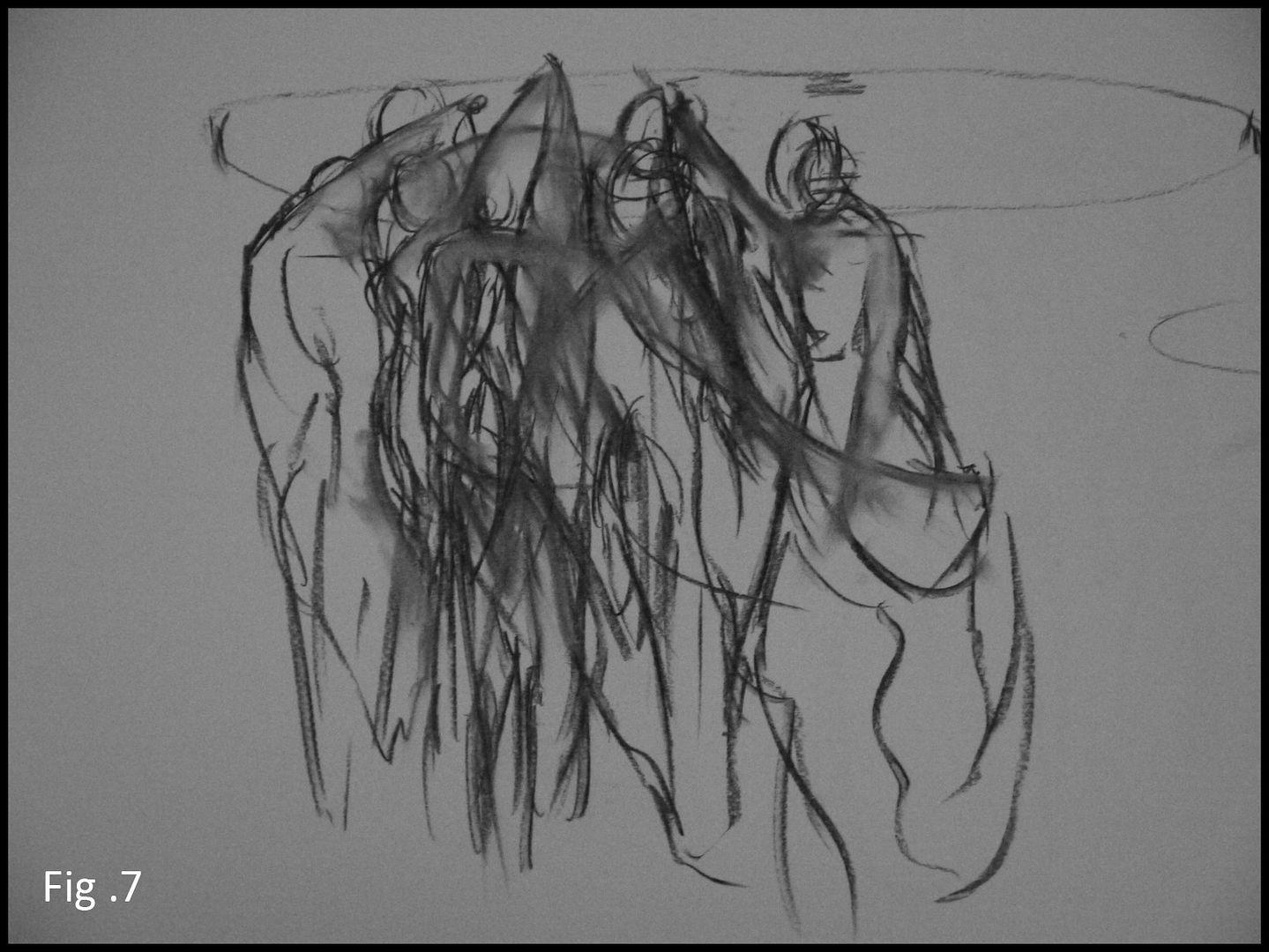
Figure 7 (shown above) was when I felt things were beginning to get really messy. As I mentioned earlier eventually too many drawings just becomes a mess and its hard to define what is what. Possibly different coloured pencils could have aided here, its what some people were doing, I wish I had considered this process, the constant array of blacks was just hard to read and identify one image from another...
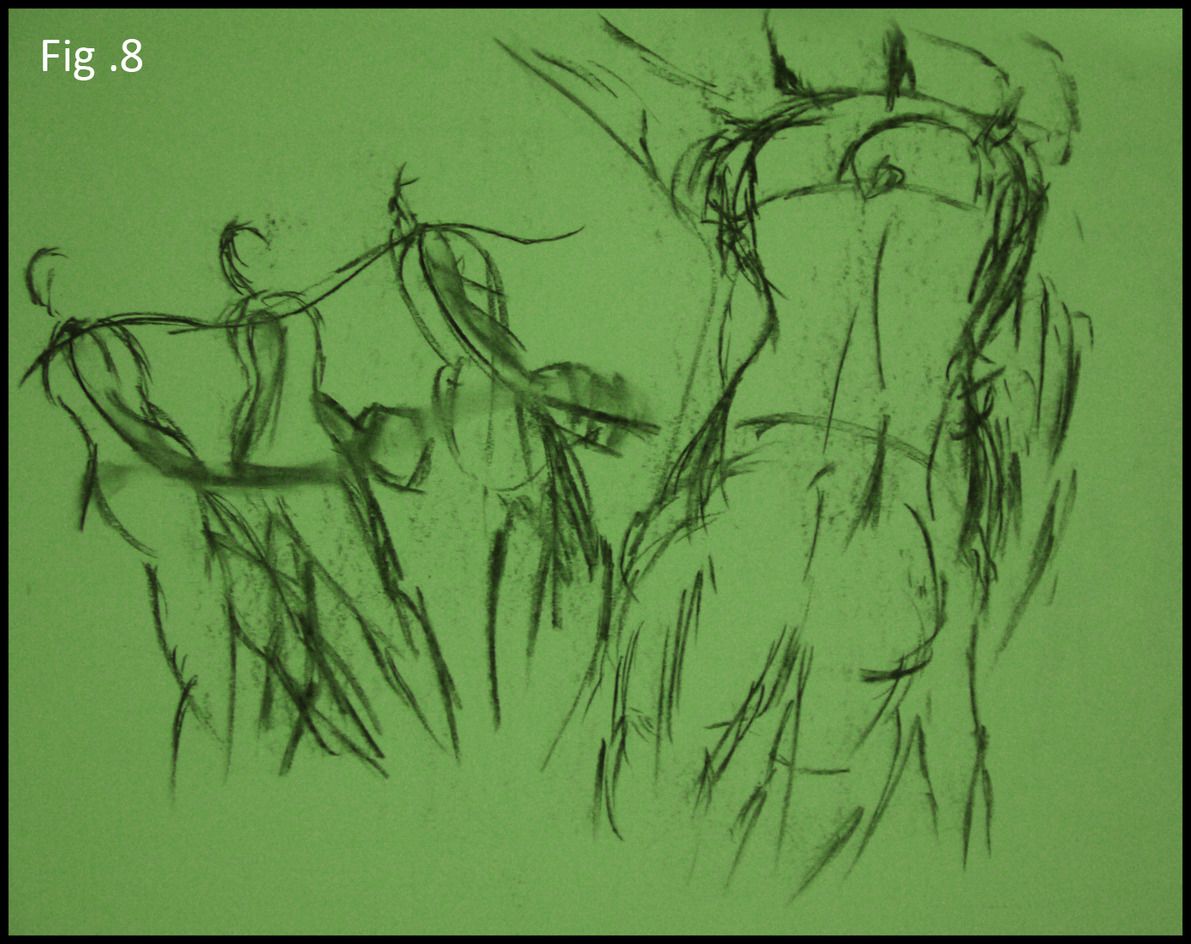
Figure 8 (shown above) was actually 2 different poses but having used so much paper I thought I would try to throw them onto a single page. At this point things were just constantly moving with no serious pausing, I found this difficult to isolate & refine. Probably what I wasn't enjoying was the inability to fixate on a pose, I think this is just a lack of experience on my part. I will be looking into improving this field in the near future...
Well that concludes week 15 of life class. It wasn't perfect but being able to identify my flaws is good, I know what I don't understand it could just be I cannot break down the information in seconds, it could be my want to be perfect... Either way I learnt a hell of a lot...about myself.
Take it easy people!!
Over & Out,
xXStItChXx
Unit 5: Animation - Walk Cycle Sheets
Hello Everyone,
Another small update before the big push tomorrow and beyond. Not sure if you have noticed but I spent a portion of today updating the blog layout as it was felt the theme I had was a bit too specific regarding the topic of genre. It was for this I decided to revert to my name and some chosen sentiments that I have to tell myself every day.
Anyway this post is about my lamps walk cycle, I had this done a few days back but due to other things as I have stated before it was put by the way side never the less it is here now...
Well lets get to it, I have another post to make after this...
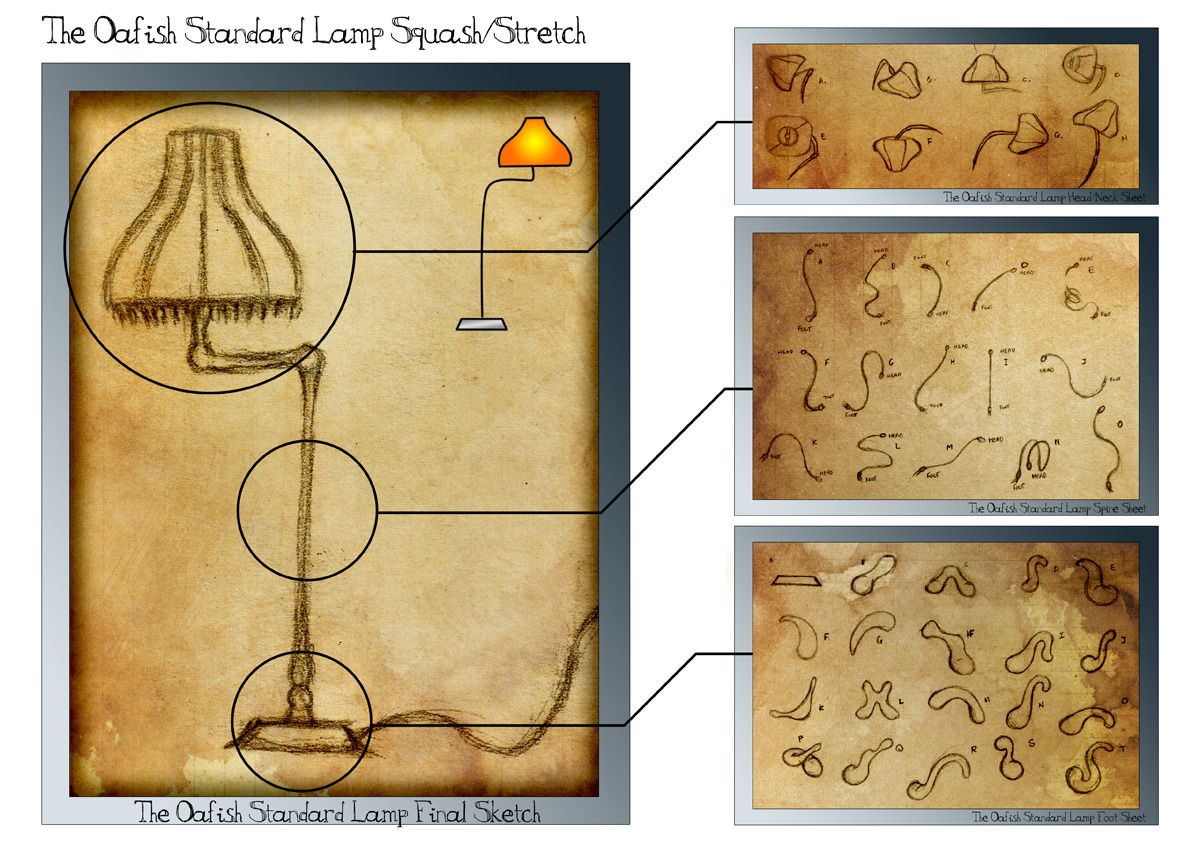
The Squash Stretch tests (shown above) were my basic introduction into beginning to animate my lamp. I wanted to break my lamp down into components, and then consider how those components could move. This was before consulting the survival kit so there are some obvious miscalculations.
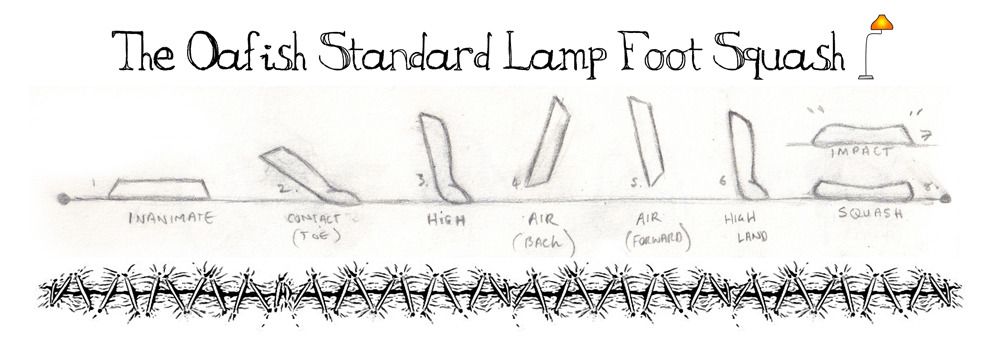
The foot squash test (shown above) was my very first in depth look into the theory behind animation. Everything began falling into place here, I knew how this lamp could move & I wanted to really convey him as a brute, the foot was only the first piece of the puzzle. This cycle will help me when I come to finally embrace this unit.
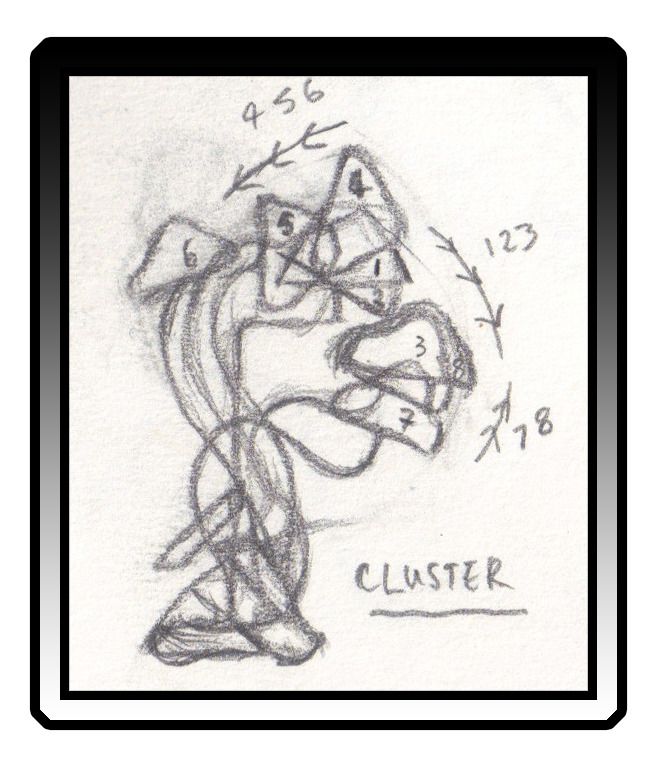
The cluster image (shown above) is what I drew out first ironically. I wanted to understand how the body reacted to its own weight and how that impacted the spine and leg. The neck was also considered especially when it was coming down from the hop, the toe approaching before the rest of the body.
The Walk cycle sheet (shown above) illustrates my oafish lamps walk broken down from the cluster. This was done after and actually made sense to me. I was also proud at how it was able to convey the motion I wanted in only 8 frames but I guess that's what successful animation is, the more accurate the less frames are required...
The Draft cycle (shown above) is what happened when I put the 8 frames together and moved them forwards. Needless to say I am quite proud at how this little guy moves. To think I was completely unconfident when drawing it in my sketch book (no animation paper was used).
The Inked cycle (shown above) was the same as the above only I decided to throw a splash of photoshop line art over the top. I probably wont reach this phase with the final animation but it was a nice thing to know was possible once I had the movement finalised. This made me think how easy it would be do ink almost anything once it is made...
The Inked cycle with sound (shown above) was my final test, I had to see how sound would work with the movement of the object. Like Disney with steamboat willie, I wanted to feel the character & I placed in a drop of my chosen track to feel the pace which worked well considerably. Pace is part of everything when considering any form of animated video.
Well that concludes my look into the walk cycle of my character, It is perfectly defined and I don't doubt I will get the chance to improve the rate of frames with the final animation push for this week.
I have another life class post to make before bed but I have learnt alot this Unit. I may not be the best but at least I understand the method, I just gotta try not to over complicate things... I tend to a lot.
Take it easy all!
Over & Out,
xXStItChXx
Friday, 6 April 2012
Unit 5: Animation - Week 3 - 2D Animation
Hello Everyone,
Just bringing in another update, the week 3 animation class (which I wasn't present for) I was told of the homework by Jojo (thanks Joe you rule). This was to establish our setting and the 3 key scenes of our narrative, the scenes I roughed out - at this point I wasn't sure where to go. Once I got cracking on establishing the setting the story began to unfold.
If you notice my storyboards are much tighter this time round also, I really managed to embrace the story after establishing my setting, it was like the missing piece of the puzzle. I can quite frankly say my storyboarding skill has most certainly improved...
Anyway lets get onto the animation homework...
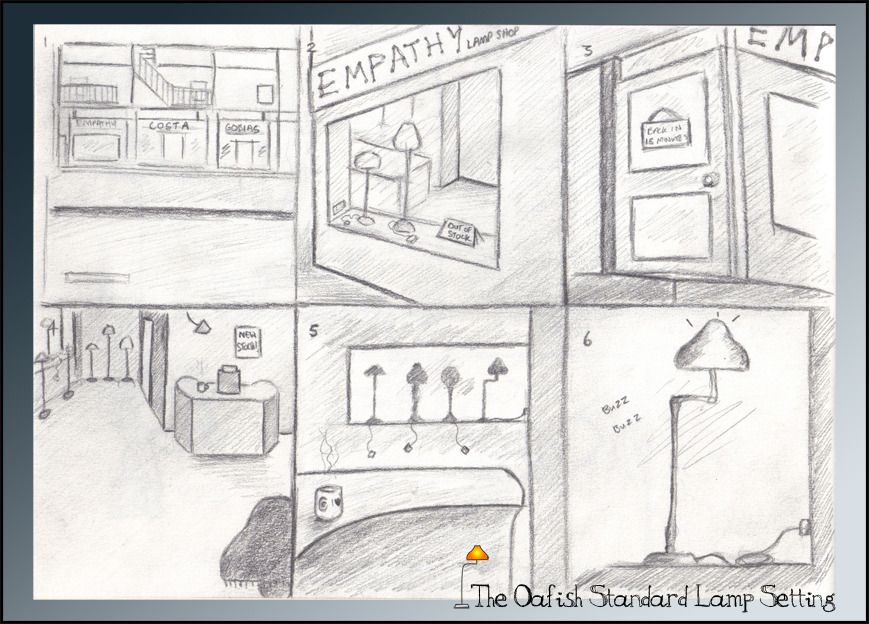
The image above shows my establishing shots for the "empathy lamp shop". I really felt proud of these images, prior to this I had no idea where to take the story, I was constantly myth ed and wondered if the story I had penned could even work. These images helped me isolate what was key, what made the store work.
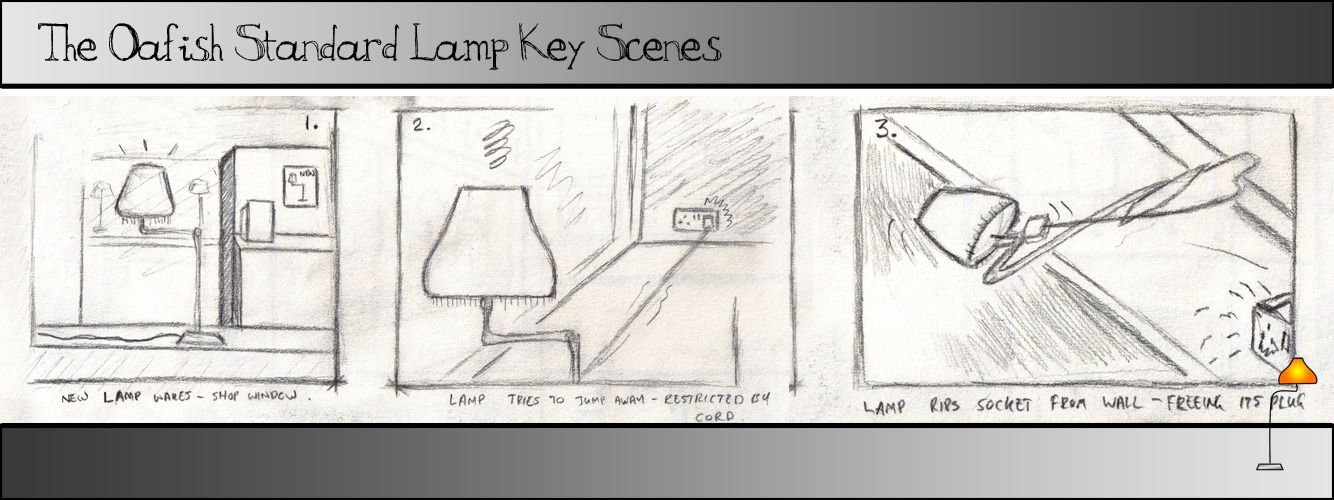
The image above shows my 3 primary scenes of the animations narrative. This aided in understanding my story, I didn't want to be precious with time on this image, I just thought what I wanted and threw it onto the page without too much thought (in the space of 10 minutes). It made me understand what was important, what was key: "A lamp awakes - and trips over, its humiliated so it takes its aggression out on its plug and rips it from the wall causing a fire".
Well this should conclude week 3 of our animation classes, again I am kind of gutted I wasn't there. My stomach always picks the best times to mess me about (which is alot nowadays sadly). Still, at least I did the tasks required and they actually helped me here so they were more then appreciated.
I guess this concludes this little post, again hope all are having a good Easter, I might go to bed in a minute :P
Take it easy!!
Over & Out,
xXStItChXx
Just bringing in another update, the week 3 animation class (which I wasn't present for) I was told of the homework by Jojo (thanks Joe you rule). This was to establish our setting and the 3 key scenes of our narrative, the scenes I roughed out - at this point I wasn't sure where to go. Once I got cracking on establishing the setting the story began to unfold.
If you notice my storyboards are much tighter this time round also, I really managed to embrace the story after establishing my setting, it was like the missing piece of the puzzle. I can quite frankly say my storyboarding skill has most certainly improved...
Anyway lets get onto the animation homework...
The image above shows my establishing shots for the "empathy lamp shop". I really felt proud of these images, prior to this I had no idea where to take the story, I was constantly myth ed and wondered if the story I had penned could even work. These images helped me isolate what was key, what made the store work.
The image above shows my 3 primary scenes of the animations narrative. This aided in understanding my story, I didn't want to be precious with time on this image, I just thought what I wanted and threw it onto the page without too much thought (in the space of 10 minutes). It made me understand what was important, what was key: "A lamp awakes - and trips over, its humiliated so it takes its aggression out on its plug and rips it from the wall causing a fire".
Well this should conclude week 3 of our animation classes, again I am kind of gutted I wasn't there. My stomach always picks the best times to mess me about (which is alot nowadays sadly). Still, at least I did the tasks required and they actually helped me here so they were more then appreciated.
I guess this concludes this little post, again hope all are having a good Easter, I might go to bed in a minute :P
Take it easy!!
Over & Out,
xXStItChXx
Unit 5: Animation - Final Storyboard & Animatic
Hello Everyone,
Once again apologies for the delay but I have been doing quite a few things, never the less I am here with one of many new updates. This week is the epic Animation grind but I am pleased to say that I am ready for it. I have a lot of things done just not alot posted so many will follow this one I am sure.
I spent most of today fixing up my animatic which included finding sound and the perfect somber tune to fit my little epic. I am quite pleased with this Animatic, its actually more lively then the long shot animatic. I was able to be more creative with fewer panels which convey what I am hoping to animate perfectly.
Anyway lets get on to the post.
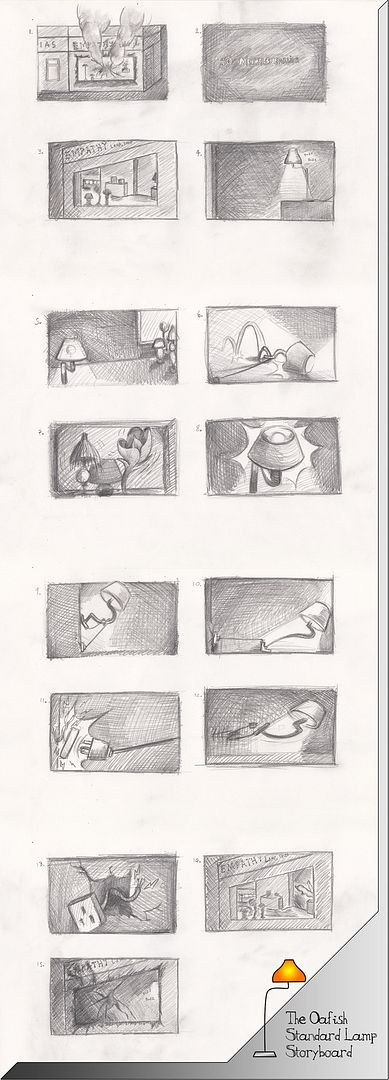
I broke my story down in 15 panels, leaving room for me to indulge in a little creativity on those impending seconds. I have planned everything down to the frame and fall perfectly with the 1 minute time constraint. The only thing the storyboards lack is the screen direction but I pretty much knew this & convey it well in the animation of the camera positioning & scale.
The animatic (above) shows my thinking toward this project, the lamp itself had to be somewhat shortened so I could fit it into a 16:9 aspect ratio, never the less it is quite obvious that my lamp is a standard lamp and not a desk lamp as was original designs. My "Slouching Lamp" is hunched and oafish, uncouth & clumsy, I didn't want to convey anything else... it just became its own after that...
Well this is the first of many but with the Animatic down I know how my story will go and exactly what needs to move and how. The rest is for everyone else to enjoy on Crit day, I just gotta pull my socks up now and get running before this project escapes me.
Hope everyone is having a good Easter btw, even though I myself have been sweating on my business stuff I have had a little time for some R&R. Never the less now back to the grind stone.
Hope everyone is good!
Over & Out,
xXStItChXx
Once again apologies for the delay but I have been doing quite a few things, never the less I am here with one of many new updates. This week is the epic Animation grind but I am pleased to say that I am ready for it. I have a lot of things done just not alot posted so many will follow this one I am sure.
I spent most of today fixing up my animatic which included finding sound and the perfect somber tune to fit my little epic. I am quite pleased with this Animatic, its actually more lively then the long shot animatic. I was able to be more creative with fewer panels which convey what I am hoping to animate perfectly.
Anyway lets get on to the post.
I broke my story down in 15 panels, leaving room for me to indulge in a little creativity on those impending seconds. I have planned everything down to the frame and fall perfectly with the 1 minute time constraint. The only thing the storyboards lack is the screen direction but I pretty much knew this & convey it well in the animation of the camera positioning & scale.
The animatic (above) shows my thinking toward this project, the lamp itself had to be somewhat shortened so I could fit it into a 16:9 aspect ratio, never the less it is quite obvious that my lamp is a standard lamp and not a desk lamp as was original designs. My "Slouching Lamp" is hunched and oafish, uncouth & clumsy, I didn't want to convey anything else... it just became its own after that...
Well this is the first of many but with the Animatic down I know how my story will go and exactly what needs to move and how. The rest is for everyone else to enjoy on Crit day, I just gotta pull my socks up now and get running before this project escapes me.
Hope everyone is having a good Easter btw, even though I myself have been sweating on my business stuff I have had a little time for some R&R. Never the less now back to the grind stone.
Hope everyone is good!
Over & Out,
xXStItChXx
Wednesday, 4 April 2012
Unit 5: Animation - Week 2 - 2D Animation
Hello Everyone,
Sorry I have been MIA, its been a hectic few weeks just thought I would post my animation stuff up for week 2. Hadn't had the chance until now, got many things moving in the background. Never the less I have been working on other things they are just not ready to be posted as of yet.
For week 2 we were required to do gesture drawings another 60 or so (10 in class and then 50 during the week). We were also required to create some animations which I found kinda tough because I am trying to conserve paper. Week 4's stuff will probably have to wait till I have completed the final animation to make sure I don't run out...
Anyway lets get down to the required...
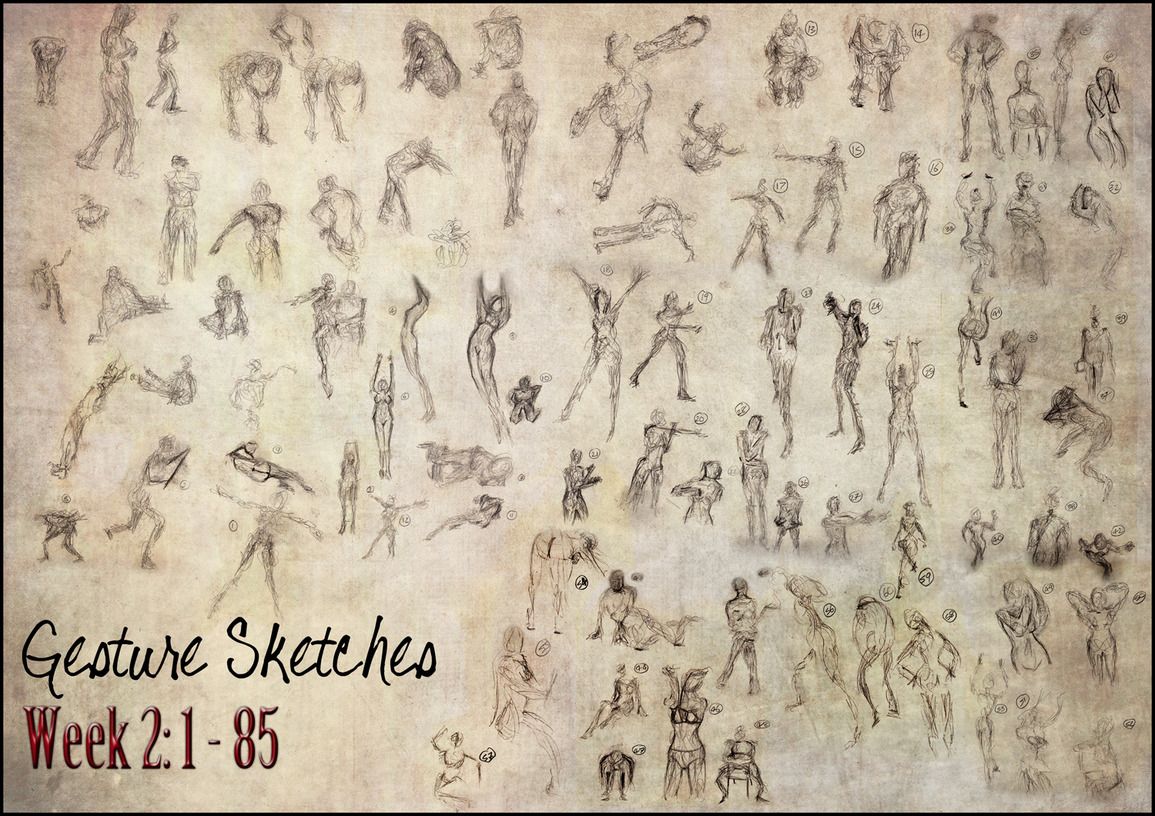
The image above shows my 85 gesture drawings which were done throughout the course of week 2. Some were better completed then others but I thought the real idea of the exercise was to establish form in a quick and rapid pace. Hence why i kept all images to a 1 minute drawing spree...
The video above is my sitting/standing animation which Meg had us draw as she stood from a chair. I managed to get some basic lines down but for the most part it was a difficult thing to isolate sheer moments. Still it's a learning curve but I managed to construct something not unfamiliar to megs stand.
The next video (shown above) is my ordinary walk cycle. I thought this went pretty well considering that I did it in the space of an hour. This gave me more confidence in my animating ability, from here I was pretty much ready to confront our final piece of homework which was the demeanour of our character...
For this video (shown above) problems came a little more thick and fast. I had the walk down all slumped looking very oafish, but the trip I elongated and therefore made more complicated. After some surgery the video flowed and really conveyed the impact of my drawn character impacting the ground and becoming dazed...
Well that concludes week 2 of our 2D animation class, I was quite gutted that I missed the other 2 weeks. I will make up for it with the homework - week 3 has already been finished. Still it would have been nice to see what other techniques Meg had to offer... hey ho...
I'm hoping my lamp walk cycle will follow this post, we will have to see I need to use the scanner and my mates zbrushing...
Over & Out,
xXStItChXx
Sorry I have been MIA, its been a hectic few weeks just thought I would post my animation stuff up for week 2. Hadn't had the chance until now, got many things moving in the background. Never the less I have been working on other things they are just not ready to be posted as of yet.
For week 2 we were required to do gesture drawings another 60 or so (10 in class and then 50 during the week). We were also required to create some animations which I found kinda tough because I am trying to conserve paper. Week 4's stuff will probably have to wait till I have completed the final animation to make sure I don't run out...
Anyway lets get down to the required...
The image above shows my 85 gesture drawings which were done throughout the course of week 2. Some were better completed then others but I thought the real idea of the exercise was to establish form in a quick and rapid pace. Hence why i kept all images to a 1 minute drawing spree...
The video above is my sitting/standing animation which Meg had us draw as she stood from a chair. I managed to get some basic lines down but for the most part it was a difficult thing to isolate sheer moments. Still it's a learning curve but I managed to construct something not unfamiliar to megs stand.
The next video (shown above) is my ordinary walk cycle. I thought this went pretty well considering that I did it in the space of an hour. This gave me more confidence in my animating ability, from here I was pretty much ready to confront our final piece of homework which was the demeanour of our character...
For this video (shown above) problems came a little more thick and fast. I had the walk down all slumped looking very oafish, but the trip I elongated and therefore made more complicated. After some surgery the video flowed and really conveyed the impact of my drawn character impacting the ground and becoming dazed...
Well that concludes week 2 of our 2D animation class, I was quite gutted that I missed the other 2 weeks. I will make up for it with the homework - week 3 has already been finished. Still it would have been nice to see what other techniques Meg had to offer... hey ho...
I'm hoping my lamp walk cycle will follow this post, we will have to see I need to use the scanner and my mates zbrushing...
Over & Out,
xXStItChXx
Friday, 23 March 2012
Unit 5: Animation - Life Class Week 14
Hello Everyone,
I just thought I would post up this weeks life class, its been sitting there nagging at me. My own nature to sit there and stare at it had gotten the better of me until now. This week was again focusing on the movement of the model a concept I hadn't grasped earlier on but I tried to embrace it near the end.
I have to say it's been a little difficult as I love to refine an image, life class has had me constantly trying to speed up. Now I have literally a second on a pose trying to encapsulate one movement into the next. It is tough but I have to take the lessons away from the class. It is important & I know that...
Lets get down to the life class images...
Figure 1 shows the quick sketch phase which once again is an assortment of poses that have to be drawn quickly. I think we had 5 minutes on each pose before the model had to move. I think I'm getting better here considering before I couldn't construct a thing in 5 minutes other then mistakes...
Figure 2 is a continuation of the quick pose phase, needless to say I was trying to fit everything to a page but sitting down made it kind of difficult to utilise everything. Still the content is what matters here not the amount or how well one fills up their page.
Figure 3 was an array of poses that we were to capture in motion, as stated at the beginning of this post, I found it kind of difficult. I didn't know what to focus on having not long on any pose what so ever. Still as the night went on I managed to get the hang of it somewhat...
Figure 4 was another 15 minute pose, again I had no idea where to begin but I decided to focus on the hips here specifically. Seeing as the entire body reacts to how we land on the floor the hips felt as though they were the centre of everything, (because they are).
Figure 5 was probably my only success of the night. I could have drawn more but the darkness of the charcoal made it rather difficult to differentiate lines behind other lines. For this I decided to focus on the 4 frames in front of me. The models foot would lead the chest, to do it ordinary makes it appear wrong so you have to exaggerate it.
Well that concludes life class for this week, I guess we will have to see how the next one goes. The next is the last one until after Easter so I guess I will have to soak up the idea of the moving image before we leave.
Take it easy everyone!
Over & Out,
xXStItChXx
I just thought I would post up this weeks life class, its been sitting there nagging at me. My own nature to sit there and stare at it had gotten the better of me until now. This week was again focusing on the movement of the model a concept I hadn't grasped earlier on but I tried to embrace it near the end.
I have to say it's been a little difficult as I love to refine an image, life class has had me constantly trying to speed up. Now I have literally a second on a pose trying to encapsulate one movement into the next. It is tough but I have to take the lessons away from the class. It is important & I know that...
Lets get down to the life class images...
Figure 1 shows the quick sketch phase which once again is an assortment of poses that have to be drawn quickly. I think we had 5 minutes on each pose before the model had to move. I think I'm getting better here considering before I couldn't construct a thing in 5 minutes other then mistakes...
Figure 2 is a continuation of the quick pose phase, needless to say I was trying to fit everything to a page but sitting down made it kind of difficult to utilise everything. Still the content is what matters here not the amount or how well one fills up their page.
Figure 3 was an array of poses that we were to capture in motion, as stated at the beginning of this post, I found it kind of difficult. I didn't know what to focus on having not long on any pose what so ever. Still as the night went on I managed to get the hang of it somewhat...
Figure 4 was another 15 minute pose, again I had no idea where to begin but I decided to focus on the hips here specifically. Seeing as the entire body reacts to how we land on the floor the hips felt as though they were the centre of everything, (because they are).
Figure 5 was probably my only success of the night. I could have drawn more but the darkness of the charcoal made it rather difficult to differentiate lines behind other lines. For this I decided to focus on the 4 frames in front of me. The models foot would lead the chest, to do it ordinary makes it appear wrong so you have to exaggerate it.
Well that concludes life class for this week, I guess we will have to see how the next one goes. The next is the last one until after Easter so I guess I will have to soak up the idea of the moving image before we leave.
Take it easy everyone!
Over & Out,
xXStItChXx
Unit 5: Animation - Maya Exercises, Week 3 - Rigging the Arms
Hello Everyone,
Just posting the Maya exercises which I have to say I could not resist doing. I felt rubbish all yesterday but still got online to have a play with the 3D rigs. Needless to say this week was the arms, so I had to plot those as well as I could, even when considering my mesh's pudgy fingers.
I have to say I think I am actually getting the hang of what goes on when I rig, I can remember on day one the connection editor being the very bane of my existence. Having to use it repeatedly for the fingers something clicked. Just to wire controls to points, the whole process is amazing I have to say & I really am enjoying it...
Anyway lets get on to the images:
Figure 1 (above) shows my empty rig which has adopted the caveman form. I am very proud of this even though I have yet to sort out the legs. Possibly over summer when I sit down to create my own rigs. There was the option to animate it but TBH I don't see the point unless Cogman moves too...
Figure 2 (above) is my 4 panel view of Cogman. I wanted to put an example of him in the rig. The next stage in the process would be weight painting, something that takes ages if you let it. I will be getting into this technique alot very soon. I'll leave it there i think :)
Well this concludes week 3 of Maya, kind of weird how quickly time seems to be flying when you are overwhelmed with bits and pieces. I am personally amazed I put up the OGR on time.
Take it easy all!
Over & Out,
xXStItChXx
Just posting the Maya exercises which I have to say I could not resist doing. I felt rubbish all yesterday but still got online to have a play with the 3D rigs. Needless to say this week was the arms, so I had to plot those as well as I could, even when considering my mesh's pudgy fingers.
I have to say I think I am actually getting the hang of what goes on when I rig, I can remember on day one the connection editor being the very bane of my existence. Having to use it repeatedly for the fingers something clicked. Just to wire controls to points, the whole process is amazing I have to say & I really am enjoying it...
Anyway lets get on to the images:
Figure 1 (above) shows my empty rig which has adopted the caveman form. I am very proud of this even though I have yet to sort out the legs. Possibly over summer when I sit down to create my own rigs. There was the option to animate it but TBH I don't see the point unless Cogman moves too...
Figure 2 (above) is my 4 panel view of Cogman. I wanted to put an example of him in the rig. The next stage in the process would be weight painting, something that takes ages if you let it. I will be getting into this technique alot very soon. I'll leave it there i think :)
Well this concludes week 3 of Maya, kind of weird how quickly time seems to be flying when you are overwhelmed with bits and pieces. I am personally amazed I put up the OGR on time.
Take it easy all!
Over & Out,
xXStItChXx
Unit 5: Animation - Assignment Introduction & Supporting Research
The Question this essay will answer: What inspired famous animator Norman McLaren & how has his work inspired contemporary animators?
Opening Line:
This essay will explore the animated rhythmic concepts of animator Norman McLaren.
Key Sources & Reasons:
The study will begin by identifying cell animation & its uses using the material from Richard Williams book “The Animator's Survival Kit” (2009). “Re-imagining animation: the changing face of the moving image” (2008) by Paul Wells, Johnny Hardstaff & Darryl Clifton will be used to establish the evolution of 2d animation methodology introducing McLaren. An article by focal press John Halas and Roger Manvell entitled “The Technique of Film Animation” (1959) will be used to establish McLarens experimental style. McLarens cultural background will be provided from an essay by Kurihara Utako entitled “Norman McLaren’s Animated Film Rythmetic as Temporal Art” (2011). This study will then identify contemporary animation that was influenced by McLaren’s style using Michel Gagne’s International gallery for “Sensology” (2010).
Order of Points:
•This study will begin by introducing the method of 2D cell animation introducing famous animator Norman McLaren. This study will then discuss Norman McLarens background before establishing his unique experimental style. To conclude this essay will identify McLarens contemporary contribution to the animation medium.
Supporting Research for Written Assignment
Books
“Re-imagining animation: the changing face of the moving image” by Paul Wells, Johnny Hardstaff & Darryl Clifton
http://books.google.co.uk/books?id=37Eo0n-s1EMC&pg=PT108&dq=norman+mclaren+animation&hl=en&sa=X&ei=EQ9oT7OlI5SR0QXU1NDiCA&redir_esc=y#v=onepage&q=norman%20mclaren%20animation&f=false
“The new documentary in action: a casebook in film making” by Alan Rosenthal
http://books.google.co.uk/books?id=qpd6WEltDOsC&pg=PA267&dq=norman+mclaren&hl=en&sa=X&ei=77lsT5TiIIGt0QXWsKm3Bg&redir_esc=y#v=onepage&q=norman%20mclaren&f=false
“Canadian film technology, 1896-1986” by Gerald G. Graham
http://books.google.co.uk/books?id=lKKoJqjVn6QC&pg=PA259&dq=norman+mclaren&hl=en&sa=X&ei=j7psT9PlBueT0QXKvITaBg&redir_esc=y#v=onepage&q=norman%20mclaren&f=false
Articles
“The Technique of Film Animation” by John Halas and Roger Manvell
http://mypage.direct.ca/w/writer/FAA.html
“Norman McLaren's Animated Film Rythmetic as Temporal Art” by Kurihara Utako
http://wwwsoc.nii.ac.jp/bigaku/aesthetics_online/aesthetics_15/text/text15_kurihara.pdf
Michel Gagne Gallery – “Sensology” by Michel Gagne
http://www.gagneint.com/Final%20site/Animation/Sensology/Sensology.html
Images
mccay7.gif
http://www.bpib.com/illustrat/mccay7.gif
936full-norman-mclaren.jpg
http://i2.listal.com/image/1634755/936full-norman-mclaren.jpg
pas_de_deux_pres.jpg
http://www.festivaltouscourts.com/medias/Image/photo/2008%
20aixperimental/pas_de_deux_pres.jpg
04_Merle_BIG.jpg
http://www.animateka.si/2011/Programme_Jury_Marcel_Jean/04_Merle_BIG.jpg
sensology.jpg
http://videos.antville.org/static/videos/images/sensology.jpg
Unit 5: Animation - Animator Profile - Pixar 1979 - present

Figure 1. Pixar
Pixar has become the very personification of animated film. A company that was initially founded to research & explore the possibility of 3D as a film device had succeeded. Some would agree that the invention of 3D killed off the future possibility of 2D films. While the statement is valid it is still quite possible that the next technological advancement is just around the corner.
Best known for:
•CGI animated feature films created with photorealistic “RenderMan”
•Animated Franchise “Toy Story”
•Animated Franchise “The Incredibles”
•Animated Franchise “Cars”

Figure 2. Toy Story
Pixar are an animation studio that specialise in creating 3D animated features & were seemingly the start of the 3D film medium. With a vast realm such as 3D studios were therefore able to create anything three dimensional. Cell drawn features were no longer confined to animation paper and light boxes, one could now view a full bodied version of their creation from all sides & evil choose to rig & animate the object/character/environment. Pixar is widely known for its use of the photorealistic “RenderMan” a suite that uses a real life lighting & shading render engine. The world would be aghast as the technology would dawn on their cinema screens with Toy Story: Daniel Terdiman observes:
“After all, Cohen explained, until "Toy Story" hit theaters in 1995, Disney had been pretty much the only maker of animated films in the United States. And based on the success of "Toy Story" and subsequent Pixar films, a whole animation industry was born in Hollywood”. (Terdiman: 2011)Around the dawn of 3D technology Disney had the only large scale 2D animation studio. Disney having rejected animator John Lasseter’s proposal to use 3D as a medium initially had seen potential with an increase of awareness of shorts created by then known as “The Graphics Group” owned by Lucasfilm. Disney eventually wound up securing allegiances with Pixar & began work on “Toy Story” a short that was seemingly inspired by Ladislaw Starevicz “The Mascot” in which toys come to life & escape being resold in a toy shop. Parts of this can even be seen in “Toy Story” as Andy begins to discard his old toys.

Figure 3. The Incredibles
While Pixar is no doubt an attribute to many intelligent minds including the late Steve Jobs it is undoubtedly the foresight of another. John Lasseter is quite possibly one of the founding fathers of 3D animation when creating his initial 3D short staring animated Lamp Luxo Jr. Having it rejected by Disney is quite possibly what baffled him the most as his accomplishment was quite amazing when one considers the technology around at the time. Still Lasseter would persevere & eventually band up with the Lucasfilm group who would allow him and many others to explore the medium which is now one of the largest today. Tom Junod of Esquire observes:
“Though not a particularly famous man, he is the creator of famous things. He's created the movies Toy Story and Cars, for instance, whose fame among children is as everlasting as the millions of small plastic products they've spawned. And he's also one of the creators of Pixar, the animation studio, which means that he's created ... well, this”. (Junod: 2011)Lasseter is a man of vision who saw and pioneered a technique which modern media utilizes in most feature films even those in full motion. CG is not only for animated shorts but also for segments in films which are enacted in front of green screen technology. Chances are nowadays if one see’s a spaceship on screen it is no longer a scale model but a 3D model. Pixar was at the base of this technology which was founded in Hollywood the place of dreams. Still none of these outside influences have changed Lasseter’s direction who still considers every option before making a true decision, in which Lasseter does with poise & calculation.

Figure 4. Cars
With Lasseters contribution as more of a skill for trade let us consider company CEO Steve Jobs who purchased the company from Lucasfilm prior to its feature length career. Job’s was a perfectionist who had an affinity for technology which would send him on a spiritual vacation from his original pursuits particularly psychology. Jobs would continue to grow interested in future technologies and practices which is what he is most known for in apple computers. Still many do not attribute Jobs contribution to Pixar which one can bet was not just a purchase for profit but a purchase due to his belief in the advancement of 3D technology. Katie Rich of Blend.com observes:
“It's hard to say exactly what impact Jobs had on Pixar when he was its CEO, since the credit for the studio's genius generally goes to its animators and storytellers. But Apple and Pixar are clearly simpatico companies, born of innovation and a desire to break away from the norm, pioneering new designs and ideas that aren't just fabulous, but game-changing”. (Rich: 2011)Katie Rich’s statement is true; both Pixar & Apple have the vision and continue to improve on their trade as technology continues to develop. Lasseter would often recount on his conversations with Jobs in which Jobs would just tell him to “Make it great”. Perhaps Job’s saw what the company was capable of from the very beginning but just lacked the confidence to do so. Regardless, these companies were run by a visionary much like Walt Disney before his passing. The animators, the men and women beneath these figure heads are as important as the person at the helm, trying to sculpt their own vision as modern day storytellers.
List of Illustrations
Figure 1. Pixar. (com) [Online image]. At: http://cdn.whatculture.com/wp-content/uploads/2011/11/pixar-animation-studios.jpg (Accessed on: 21/03/12)
Figure 2. Toy Story. (com) [Online image]. At:
http://images.pictureshunt.com/pics/t/toy_story-4955.jpg (Accessed on: 21/03/12)
Figure 3. The Incredibles. (com) [Online image]. At: http://www.filmwerk.co.uk/wp-content/uploads/913ms.jpg
(Accessed on: 21/03/12)
Figure 4. Cars. (com) [Online image]. At: http://www.cars-pictures-index.com/files/images/cats/79.jpg
(Accessed on: 21/03/12)
Bibliography
Terdiman, Daniel. (2011) With Pixar, Steve Jobs changed the film industry forever. At: http://news.cnet.com/8301-13579_3-20116912-37/with-pixar-steve-jobs-changed-the-film-industry-forever/
(Accessed on: 21/03/12)
Junod, Tom. (2011) Father of the Year. At:
http://www.esquire.com/features/john-lasseter-quotes-0611 (Accessed on: 21/03/12)
Rich, Katey. (2011) Remembering Steve Jobs, Who Made Pixar Possible. At:
http://www.cinemablend.com/new/Remembering-Steve-Jobs-Who-Made-Pixar-Possible-27164.html (Accessed on: 21/03/12)
Unit 5: Animation - Animator Profile - Bill Plympton 1946 - present

Figure 1. Bill Plympton
Bill Plympton’s style is very expressive showing a classic comic theme in each of his exploits. His humour is daring & very explicit, launching an assault of clichés at the audience nearly knocking them from their feet with exaggerated movement. Plympton’s characters are the most impressive all utilizing unique physical traits which are compatible with their demeanour.
Best known for:
•His distinctive caricature art style
•Political Cartoon Strip “Plympton”
•Animated Short “Your Face”
•Animated Feature “Hair High”
Figure 2. Plympton
Plympton is probably most famous for his style which was been accepted globally from his initial short 1983 entitled “Boomtown”. His style would then be on demand from television shows to short commercials for MTV. When watching Plympton’s work one cannot help but feel each message as clear as day, his work is well produced & really excites on numerous levels. Plymptons crude style has been felt throughout more specifically after he established himself as an animator of note after his initial success. Alyce Wilson of probe observes:
“Animator Bill Plympton first earned distinction through his off-the-wall short animated films, played on MTV, as well as on other channels and on the festival circuit. An artist who began his career as an editorial cartoonist and illustrator, Plympton has since created feature length animated films and even written and directed live action films”. (Wilson: 2005)Plympton’s work conveys society as a drug trip with people sporting exaggeration associated with their personality (example – the nerd cliché - large glasses & buck teeth). His colour work is strong & very personalised, in some cases contrasting tones that no other would even consider for fear of distracting the viewer. This is probably were Plympton’s work has its biggest downfall where the colours can feel so stylised that they distract from the narrative that his work is trying to convey.

Figure 3. Your Face
This is not to say that Plympton’s narratives are lost in the limelight but more so to say that they can sometimes discredit what is considered to be well driven stories. Regardless, no one can take away from Plympton’s achievements which have transcended & adapted well to contemporary media. Plympton’s work was a high commodity in the past mainly because of its vision & how it conveyed society, more notably of the music scene with MTV’s Liquid Television. Drew Grant of Salon Core observes:
“Plympton’s work on Fox’s “The Edge” and MTV’s “Liquid Television” in the 1980s and ’90s were so ahead of their time it’s amazing the networks allowed it — but he now bemoans the lack of American distribution for adult cartoons. (My personal favorite of his is “25 Ways to Quit Smoking.”) He hates Internet piracy, but loves the international audience it has provided him”. (Drew: 2011)One can appreciate Plympton’s work on an adult level but that is not to say that his talent could not entertain children. This is what separates his style distinctively from his narratives with both conveying different messages; children would see this as a colourful experience while adults see it as an acid trip compiled of dirty jokes stereotypes. Contemporary animation of today is primarily aimed at children but with the onset of animated series such as Seth MacFarlane’s “Family guy” or Trey Parker & Matt Stones “South Park” it is fair to say that animation is shifting its way to adults, quite possibly because of Plympton’s influence.

Figure 4. Hair High
Animation has been Plympton’s dream since he was a child always aspiring to create films alongside greats such as Walt Disney. Still it is fair to say that Plympton’s style does not ring very true of his former inspiration. In fact it is probably more likely to say that Plympton’s style still roots back to his days as a comic illustrator paying homage to his ability as an artist not so much as an animator. Plymptons exposition & animation hand print has been gifted from his credited roots due to his ability to notice form and express his unique style through it. Robert Kohr of Plymptoon’s observes:
“All his life, Bill Plympton has been fascinated by animation. When he was fourteen, he sent Disney some of his cartoons and offered up his services as animator. They wrote back and told him that while his drawings showed promise, he was too young”. (Kohr: 2004)Bill Plympton was inspired from an early age & it is a testament to his talent that Disney liked his early cartoons. To think where the medium could have been now had Disney signed him when he was younger. Still to think what we may have lost out on with Plympton confining himself to innocent child cartoons. Plympton is a wonder & his style has its place in our minds and hearts expressing the very ideals of historical & contemporary cultures. His work is growing with its generation, as Plympton’s skill expands so does the next piece of work.
List of Illustrations
Figure 1. Bill Plympton. (com) [Online image]. At: https://blogger.googleusercontent.com/img/b/R29vZ2xl/AVvXsEjChpU7KA-tL8qpEgmGKze6hxVoo0yLmxR52Gn1SwI20dNAbbBzolOHbrgp0F6vmVfACzEENoCQNOwNs2J8CuPB5VqIW9nAesQuvlrC9S0e6P2u2AdZ4g0JJCB8-QZHK24kt0vaU06nMGI/s1600/bill_plympton.jpg (Accessed on: 21/03/12)
Figure 2. Plympton. (com) [Online image]. At:
http://www.coolhunting.com/assets_c/2011/03/bplympton4-thumb-900x522-26762.jpg (Accessed on: 21/03/12)
Figure 3. Your Face. (com) [Online image]. At: http://www.ctnanimationexpo.com/wp-content/uploads/2011/07/bill_plympton_1.jpg
(Accessed on: 21/03/12)
Figure 4. Hair High. (com) [Online image]. At: http://www.animatorsunite.com/data/wp-content/uploads/2007/03/hairhigh.jpg
(Accessed on: 21/03/12)
Bibliography
Wilson, Alyce. (2007) Probe: Bill Plympton. At: http://www.wildviolet.net/spring3/bill_plympton.html
(Accessed on: 21/03/12)
Grant, Drew. (2011) The fascinating contradictions of Bill Plympton. At:
http://www.salon.com/2011/08/18/bill_plympton_interview/ (Accessed on: 21/03/12)
Kohr, Robert. (2004) Plymptoons Biography. At:
http://www.plymptoons.com/biography/bio.html (Accessed on: 21/03/12)
Unit 5: Animation - Animator Profile - Phil Mulloy 1948 - present

Figure 1. Phil Mulloy
Mulloy’s work speaks volumes about modern society & culture. The genre of his shorts is essentially black comedy for the most part in which he illustrates using black ink against white paper with primitive skeleton characters as cast. Mulloy’s work exploits the clichés of the ever popular Hollywood genres.
Best known for:
•His visual style of skeletal figures against minimalist backgrounds
•Animated Series “Cowboys”
•Animated Series “The Ten Commandments”
•Animated Series “The Chain”

Figure 2. Cowboys
Mulloy’s work borders on the demonic with a simple cause & effect logic. A dilemma is presented for each of his individual animated shorts that in some shape or fashion correspond to a cultural tradition or past time. Mulloy’s work can be considered rather barbaric as the artist feels no need to hold his punches. With that being said the messages are extremely clear one even remembers an episode of Cowboys entitled “Murder” in which Mulloy pokes fun at Lynch mobs & societies history of dealing with evil men, aiding each other to snap the murderers neck. Green Jersey of BFI Film Store observes:
“The antidote to all that is kitsch and sentimental, these direct, witty and acerbic fables, drawn in brush and ink, perceptively comment on human nature and challenge contemporary values”. (Jersey: 2002)Mulloy’s style is crude & simplistic but it works for the arguments in which he is making, he could not convey man in a worse light then portraying society as a form of walking skeleton. The environments are not the focus, the people are which is true of the world, society is where it is because of the people populating it. Mulloy’s work is a portrayal of clichés that inspect the human condition & draw a conclusion usually as a punch line, the end to a 3 minute joke summarising man as the true evil to any given situation.

Figure 3. The Ten Commandments
Mulloys work feels almost strategically based in groupings, mostly because each of them contains a theme that directly relates with another. What is quite possibly the strongest element of Mulloys work is just how the messages are conveyed simply dealing with a chosen situation in a specific satiric way. One could argue that this is due to the minimal props & settings on screen, the characters are the focal point relaying reality at its most shameful. Still, Mulloy’s work is effective as Anthony Nield of The Digital Film Fix observes:
“Indeed, Mulloy’s work is serious in the extreme as he tackles what he considers to be the major problems infecting society. The Cowboys films see the beginnings of this idea as he confronts issues of crowd mentality; The Conformist being the most blatant, dealing with, unsurprisingly, conformity”. (Nield: 2003)Mulloy’s dilemmas are extraordinarily clear especially to the person that is searching for the meaning of the animated short. Let us consider conformity a cowboy short made by Mulloy in which a cowboy spends ten years of his life chasing a horse. Eventually he captures the horse & returns only to find everybody has horses with wheels on their feet. Everybody else mock him so he goes away and saws his horses legs off conforming to what is modern. The book is open & shut over the course of 3 minutes if anything Mulloy’s shorts could be considered a definition of words to the modern society.

Figure 4. The Chain
What is probably Mulloy’s biggest downfall is again when one looks at the opposite side of the scale. While it is clear the Mulloy is trying to convey a message it is obvious to the point of a grade school understanding, constantly smacking one in the face with its levels of obviousness. This can get pretty tiresome after watching a few examples of Mulloy’s work as one begins to notice his tendency to over embellish. With that being said Mulloy’s work is for the most part unique conveying the grit & grime of our culture in a thrash style. Sean Gandert of Paste Magazine observes:
“The paintings themselves are simple and unattractive, but taken as a whole, create absolutely gorgeous, expressive panoramas. Not only that, but the style fits perfectly with Mulloy's brazen storytelling, as it's endlessly and undeniably in your face”. (Gandert: 2009)Still it can be said that as Mulloy’s work as continued to grow his backgrounds are continually become less bare and more colourful. Mulloy’s characters remain ugly & deformed as his need to portray man as evil continues to establish him as a reputable animator. The people in Mulloy’s shorts are all bad, there is never a good person which one could argue is Mulloy’s brazen way of saying to everyone that man is flawed. Man is and will continue to be an obvious metaphor for their inner natures, establishing our race as the demon and the world as the innocent (Man – Black/Evil World – White/Good).
List of Illustrations
Figure 1. Phil Mulloy. (com) [Online image]. At: http://s3.amazonaws.com/auteurs_production/images/cast_member/132241/original.jpg (Accessed on: 21/03/12)
Figure 2. Cowboys. (com) [Online image]. At:
http://www.cinemayence.de/image/090623cowboys29.jpg (Accessed on: 21/03/12)
Figure 3. The Ten Commandments. (com) [Online image]. At: http://designattack.pl/wp-content/uploads/2011/07/Mulloy02.jpg
(Accessed on: 21/03/12)
Figure 4. The Chain. (com) [Online image]. At: http://www.faap.br/destaques/anima_mundi/images/phil_mulloy_the_chain.jpg
(Accessed on: 21/03/12)
Bibliography
Jersey, Green. (2002) Phil Mulloy: Extreme Animation. At: http://filmstore.bfi.org.uk/acatalog/info_48.html
(Accessed on: 21/03/12)
Nield, Anthony. (2003) Phil Mulloy: Extreme Animation. At:
http://film.thedigitalfix.com/content/id/5909/phil-mulloy-extreme-animation.html
(Accessed on: 21/03/12)
Gandert, Sean. (2009) Salute Your Shorts: Phil Mulloy's Extreme Animation. At:
http://www.pastemagazine.com/articles/2009/07/salute-your-shorts-phil-mulloys-extreme-animation.html (Accessed on: 21/03/12)
Thursday, 22 March 2012
Unit 5: Animation - Animator Profile - Jiri Barta 1948 - present

Figure 1. Jiri Barta
Jiri Barta is a stop motion film maker much like fellow artist Jan Svankmajer, his primary talents lie in his ability with the medium of wood, particularly for wooden puppets. Still one would have to consider Barta’s range of art forms particularly works like “Disc Jockey” which one could attribute to the late Lotte Reiniger only with colour & rhythm as opposed to silhouette.
Best known for:
•His use of the medium of wood for animation
•Animated Feature “In the Attic”
•Animated Feature “The Pied Piper”
•Animated Short “Disc Jockey”

Figure 2. Disc Jockey
Jiri Barta has a wide range of talent, experimenting with different types of animation early on before finding his true calling. His gift to the modern world is largely due to his stop motion epics like “The Pied Piper” which would see full scale wooden models performing exploits to the plot of a narrative. Still, much like the Brothers Quay one would have to take serious note of his empathy toward sound which compliment his feature works such as “In the Attic” with vivacity, truly encapsulating his audience. Jenny Jediny of not coming to a theatre near you observes:
“Like Svankmajer, Barta leans toward the grotesque in his imagery; sound is heavily emphasized, whether it is blood sloshing or a guttural, nonsensical tongue, providing a tactile quality to his characters and their universe”. (Jediny: 2007)Barta’s fictional worlds & characters jump to life on screen be they an old child like toy or a moral/immoral pied piper. Nothing is truly left to the imagination, it is shown as clear as day as if trying to capture something more then what is in front of the audience. Every sound effect feels almost amplified to make the audience feel as though they are the ones instigating the protagonist’s tasks. It’s almost as if one would be able to sum the animated story up by closing their eyes to let their ears do the visualising for them.

Figure 3. The Pied Piper
Barta’s particular talent still lies within his ability to tell a gruesome tale which is no doubt where he got some of his early influences through Jan Svankmajer. Still unlike these other talented stop motion colleagues Barta likes to consider the opening of hope. Barta’s animated narratives serve a purpose & unlike the Brothers Quay have elements of charm & sophistication not adhering to the entirety of doom & gloom. One could argue that this is to discredit the uncanny only to bring each absurd reality closer to home for his audience. Ivana Košuličová of Kinoeye observes:
“In these films, Barta creates mysterious horror worlds full of sinful, grasping humans who reflect the decay of human society. Apocalypse for humankind comes from the uncanny beings from the "other side." Yet, there always remains some hope: in elderly wisdom, in innocent childhood and in the morning that comes after a vampires' night”. (Košuličová: 2002)One could argue that Barta’s work was not an attempt to dissuade the dream logic to the point of realism but to fine tune the dramaticism communicating its subtle messages to the masses. The “other side” of “the Pied Piper” reflects a chaotic evil but behind every shadow is that glimmer of light not pristine to the perfect life but pristine to life’s opposite. Barta is never trying to communicate perfection, just the ideal of perfection to these horrific worlds.

Figure 4. In the attic
Let us contrast Barta’s past works with his newest considering the children’s epic “In the Attic”. The toys feel very textural with the sound once again playing its key tones layers above everything else. The attic itself is clustered in dust & cob webs but the charm is most certainly provided by the props creating a life scale epic of a miniature scenario. The toys are lovable but battered & discarded; the Pixar logic of toys wishing to be played with is not the key situation, the toys themselves are individuals, living out their daily routines until a tragedy occurs. Dan North of Spectacular attractions observes:
“Barta’s film tries to reassure us that the toys retain their independence, going about their business regardless, even in spite of the humans who live below them. These characters carry a sense-memory of their former function as toys, replaying the roles they were assigned from birth, and therein lies a gentle description of a para-world of social roles and ritualised behaviours”. (North: 2010)One could not help but feel as though Barta did not want to aim this tale at children with the aesthetic sense that all toys have a single purpose. One could say that this is a testament to Ladislaw Starewicz “Fétiche Mascotte” portraying the identities of discarded toys uncertain and left to their outside influences. Still in this case it is fair to say that a certain charm is brought forth by these toys banding together to save one of their family, the toy personalities are caring or a personification of evil. Barta’s tactile charm is the cherry on the cake with every on screen action to be celebrated with stylised stop frame gesture.
List of Illustrations
Figure 1. Jiri Barta. (com) [Online image]. At: https://blogger.googleusercontent.com/img/b/R29vZ2xl/AVvXsEiJOhrxMeAsI9YPCLbafEZ_5A1k6wKqvjF-VxNZFhllxYKm-C23yQTHn7WKTVkQWICSf11oCQc9YVOh9tiVlfHQR1utiQBNLFVQ4F37Y69k_0Jt31KQr8e4GXwmujeuNxx4F8jaYxDZbNBI/s1600/600full-jiri-barta.jpg (Accessed on: 21/03/12)
Figure 2. Disc Jockey. (com) [Online image]. At:
http://img.photobucket.com/albums/v424/smalloranges/20090502192853.jpg
(Accessed on: 21/03/12)
Figure 3. The Pied Piper. (com) [Online image]. At: http://notcoming.com/animation/images/barta_piper.gif
(Accessed on: 21/03/12)
Figure 4. In the attic. (com) [Online image]. At: http://farm5.staticflickr.com/4070/4593474512_262809e983_z.jpg
(Accessed on: 21/03/12)
Bibliography
Jediny, Jenny. (2007) The Animation of Jirí Barta. At: http://notcoming.com/features/jiribarta/
(Accessed on: 21/03/12)
Košuličová, Ivana. (2002) The morality of horror. At:
http://www.kinoeye.org/02/01/kosulicova01_no2.php (Accessed on: 21/03/12)
North, Dan. (2010) Jiří Barta’s In the Attic: The Other Toy Story. At:
http://drnorth.wordpress.com/2010/05/13/jiri-bartas-in-the-attic-the-other-toy-story/ (Accessed on: 21/03/12)
Unit 5: Animation - Animator Profile - The Brothers Quay 1947 - present

Figure 1. The Brothers Quay
The Brothers Quay illustrate a very disturbing scene with the ambiguous undertones from influences such as Jan Svankmajer. One cannot help but notice the desolate destruction as if portrayed in a back alley, the crafted toys focus on gestural animation but every tiny detail is considered conjuring a haunting image for all.
Best known for:
•Their dark moody atmospheres & disassembled puppetry
•Animated Feature “Street of Crocodiles”
•Animated Feature “Nocturna Artificialia”
•Live Action Film “Institute Benjamenta”

Figure 2. Nocturna Artificialia
The Brothers Quay started of their careers as illustrators graduating from the Philadelphia College of Art. They moved on to making animated films when receiving a scholarship to the Royal College of Art London. While in London they got to work on their initial animated shorts which were mostly lost their memorable short at the time was “Nocturna Artificialia” an enigmatic story told in chapters each separated by title cards. What is probably most memorable of the Quays work is their attention to detail in their stylistic dreary sets. Ewa Mazierska of Screen online observes:
“The Quays are renowned for their craftsmanlike methods and their unusual sources of inspiration. Apart from their puppets, which typically look like old dolls abused by many generations of children, they construct their own sets, arrange the lighting, and operate the cameras”. (Mazierska: 2003)The Quays work aspires to the stop motion medium with characters reattaching themselves in front of the audience in a dismal post apocalyptic setting. The sadness is best described by the setting while the fear is uncannily provided by the old beaten dolls, some with organic counterparts. The Quay’s ability to stage a small scene as though it is a life sized epic is probably the most influential aspect of their work. No detail is taken for granted and serves a key purpose to their narrative & influential goal.

Figure 3. Institute Benjamenta
Perhaps what is most fascinating is the Quays ability to alter the requirements of their narrative, distorting & shifting its will to evoke further insecurities from the viewing audience. It is the Quays goal to create a sort of suspension that defies realty not that much unlike a dream state. People can relate to the fictitious worlds of the Quay even if it is sometimes on the realm of the nightmare as opposed to the dream. Still one cannot take away their achievements, to create a purposeful image blurring the edges from dream from logic. Gale Cengage of Enotes observes:
“To an even greater degree than many of their literary influences, the Quays eschew linear storytelling for the evocation of intense psychological states by means of oneiric and obliquely sinister images accompanied by provocative sounds and music”. (Cengage: 1997)The Brothers Quay tend to tie the art of Pathology to their work focusing on its grotesque consequence. Their work borders on the fetish at certain points (e.g. topless dolls all posed in crude demeanour). The realities portrayed in their work symbolise a brittle truth which is somewhat archaic leaving one in a state of depression. The Quays music only attributes to the image of the depressive & fearful without answering too many questions imposed by the oneiric narrative. However, un-nerving the Quay’s work is inspiring expressing great attention to detail & a great sense of filmic exposure.

Figure 4. Street of Crocodiles
The Quay’s work is surreal providing subtle undertones that link to cultural reality it is only due to their dire need to explain the distressed that make certain themes ideal. Their most famous animated short “Street of Crocodiles” is a testament to their skill set locking audiences into a frozen half made world unparallel to time itself. Everything feels distorted as the ticking clock remains dormant with its fleshy counterpart replacing the clockwork interior. Screws come to life and start dancing as if in a crazed ballet before winding themselves back into the wooden floor. The questions are rampant but so are the audiences need to speculate what the narrative means to them. Alan Schwartz of the European graduate school observes:
“...their most famous work to date, Street of Crocodiles is a twenty-one minute animation film which evokes pre-war Poland, provincial and mystical, connected to the traditions of history before the destruction of the German war machine rolled across it”. (Schwartz: 2003)The Brothers Quay exaggerate the cultural history of the world in their works capitalizing on a dream state narrative that can either birth feelings of empathy or the uncanny. To ask the Quays for their testament to the study of psychology their influences can be summed up to the forms of the fetish or pathology. From this one can only draw the conclusion that their work suggests deeper meaning, a bitter truth that can be understood or discarded. From their exploits one would have to argue that their understanding of the Uncanny would have to be another undertone of their work due to the human psyches need to discard a familiar unfamiliar much like Jan Svankmajer before them.
List of Illustrations
Figure 1. The Brothers Quay. (com) [Online image]. At: http://twitchfilm.com/news/BrothersQuay.gif (Accessed on: 21/03/12)
Figure 2. Nocturna Artificialia. (com) [Online image]. At:
http://www.dvdbeaver.com/film2/DVDReviews30/a%20phantom%20museums%20quay%20shorts/nocturna%20artificiala%202.jpg (Accessed on: 21/03/12)
Figure 3. Institute Benjamenta. (com) [Online image]. At: http://verdoux.files.wordpress.com/2009/06/institute-benjamenta-still-b.jpg
(Accessed on: 21/03/12)
Figure 4. Street of Crocodiles. (com) [Online image]. At: http://asifa.net/wp-content/images/50x50/The%20Street%20of%20Crocodiles.jpg
(Accessed on: 21/03/12)
Bibliography
Mazierska, Ewa. (2003) Quay, Brothers (1947-). At: http://www.screenonline.org.uk/people/id/498256/
(Accessed on: 21/03/12)
Cengage, Gale. (1997) the Brothers Quay Criticism. At:
http://www.enotes.com/brothers-quay-criticism/brothers-quay (Accessed on: 21/03/12)
Schwartz, Alan. (2003) Stephen Quay and Timothy Quay - Biography. At:
http://www.egs.edu/faculty/stephen-timothy-quay/biography/ (Accessed on: 21/03/12)
Unit 5: Animation - Animator Profile - Jan Svankmajer 1934 - present

Figure 1. Jan Svankmajer
One could say that Svankmajer’s surreal eye is the more domineering aspect of his trade. His models border very close to the uncanny while scaring on familiar levels. One could argue that Svankmajer’s stories benefit from his style, creating a strange insecurity within us all. With that being said he is still a great contributor to the animation medium.
Best known for:
•His Surreal Uncanny stop motion technique
•Animated Feature “Alice”
•Animated Feature “Faust”
•Animated Feature “Conspirators of pleasure”

Figure 2. Surreal clay Sculpture
Jan Svankmajer’s passion grew from early childhood with a gift that would send him into the animation medium. Having been gifted a puppet theatre Svankmajer went on to establish his body of work through forging custom made puppets (much like Ladislaw Starewicz). However, it is established that Snakmajer never wanted to succeed as an animator but to succeed by giving life to otherwise everyday objects. From this one could argue that Svankmajer never intended to tell a story but to just establish humans interacting with artificiality. When asked about his technique in an interview animator Jan Svankmajer replied:
“Animators tend to construct a closed world for themselves, like pigeon fanciers or rabbit breeders." Svankmajer stated in an interview, "I never call myself an animated filmmaker because I am interested not in animation techniques or creating a complete illusion, but in bringing life to everyday objects”. (Svankmajer: 1997)Still when one thinks of Svankmajer’s work it is quite fair to say that that a story is still somewhat at the heart, even if it is not his goal to deliver an animated film. Perhaps what Svankmajer’s work signifies is just how far one can push an audience before their thoughts on a concept change. One could argue that his work is just a testament to his understanding of the human psyche to which some of his more Freudian interpretations are to be considered. Svankmajer’s work is a lesson to us all, to establish what is right & what is wrong in terms of animation.

Figure 3. Alice
One cannot help but also lay homage to Svankmajers fascination to the act of eating, turning a usually fruitless on screen act into a cursed reality. Let us consider Svankmajers work “Alice”, in which you have a girl not questioning the food on display, eating cookies which inevitably change her in size. It is even fair to consider the rabbit that is forever late, constantly eating its own stuffing which ejects through its chest. These acts are slightly ambiguous mostly a testament to Svankmajers importance of the food to his narrative. Still it is fair to say Svankmajer had a goal in mind for “Alice” one that would transcend the Disney classic. Jeremy Heilman of Movie Martyr observes:
“Instead of dumbing down Carroll’s novel, as Disney’s animated feature did, Svankmajer tries to understand what it is that makes its youthful protagonist tick. If he doesn’t seem to come to the same conclusions that Carroll did, he certainly makes a film that offers a compelling alternative reading”. (Heilman: 2002)Svankmajer focused on the protagonist of Carroll’s classic novel as opposed to the wonders of the life down a rabbit hole. One cannot help but wonder why a seemingly sweet girl would follow a scary rabbit into a drawer, or for that matter understand where that drawer came from. One could argue that Svankmajer wanted to focus on that sweet girl even going so far as to make her somewhat ambiguous. The story is entirely about Alice & does not revolve around certainty; objects feel as though they choose when to appear & what role they are to play in the next shot.

Figure 4. Faust
With the allure of Alice aside let us return to Svankmajer whose work originated with the concept of puppetry. Svankmajer explores realms some would consider to be distasteful or unsettling; still it is not without renown. Some have to be bold to find their true place of their chosen medium; Svankmajer’s goal is to understand how the human psyche reacts to his work & why. Svankmajers work is a celebration of creativity & the modern world in general, for each scene of his work is not only a reflection on him, but a reflection on us. Chris Buckle of The Skinny Cultural Journal observes:
“Whether live action, animation, or, most often, a combination of the two, Svankmajer’s work celebrates the power of imagination in all its facets: absurd, fantastical, allegorical, and often unsettling. Svankmajer takes mundane reality and sculpts something uncanny”. (Buckle: 2012)The uncanny is most certainly something that Svankmajer battles with on a continual basis, mostly due to some of his more true life subjects (the rabbit in Alice for example). One can only attribute this once again to Svankmajer’s continual identification of the psyches interpretation of Uncanny. This claim is less true of Svankmajer’s more creative projects in which the characters are based of usual inanimate objects that have somewhat come to life, after all the Uncanny is only felt when a familiar object feels unfamiliar (moving in a funny way, etc). Jan Svankmajer will forever be an animator of note for generations to come.
List of Illustrations
Figure 1. Jan Svankmajer. (com) [Online image]. At: http://kennethcox.files.wordpress.com/2011/04/portrait-jan-svankmajer-1.jpg
(Accessed on: 21/03/12)
Figure 2. Surreal clay Sculpture. (com) [Online image]. At: http://images.greencine.com/images/article/cz-dialogue.jpg
(Accessed on: 21/03/12)
Figure 3. Alice. (com) [Online image]. At: http://www.apengine.org/wp-content/uploads/2010/04/alice-still.jpg
(Accessed on: 21/03/12)
Figure 4. Faust. (com) [Online image]. At:
http://completement.files.wordpress.com/2009/02/faust-baby1.jpg (Accessed on: 21/03/12)
Bibliography
Svankmajer, Jan. (1997) The Surrealist Conspirator: An Interview With Jan Svankmajer. At: http://www.awn.com/mag/issue2.3/issue2.3pages/2.3jacksonsvankmajer.html
(Accessed on: 21/03/12)
Heilman, Jeremy. (2002) Alice (Jan Svankmajer) 1988. At:
http://www.moviemartyr.com/1988/alice.htm (Accessed on: 21/03/12)
Buckle, Chris. (2012) GFF 2012: 85A Presents Jan Svankmajer. At:
http://www.theskinny.co.uk/film/features/301264-gff_2012_85a_presents_jan_svankmajer (Accessed on: 21/03/12)
Subscribe to:
Posts (Atom)